

Why Businesses Need Professional Video

A prospect lands on your website, scrolls for a few seconds, and leaves. That happens every day to good businesses with weak visual communication. If you are wondering why businesses need professional video, the answer is simple - people make fast judgments, and professional video helps them UNDERSTAND, TRUST, and REMEMBER your brand before they move on.

For many companies, video is no longer a nice extra for the homepage or a one-time social media post. It has become one of the clearest ways to explain what you do, show how you do it, and give potential customers a reason to choose you. The difference is not just having video. It is having video that is planned well, produced well, and built around a real business goal.

Why businesses need professional video for growth

Professional video helps businesses grow because it compresses a lot of value into a short amount of time. A well-made brand film, testimonial, service overview, recruiting video, or campaign asset can communicate credibility, personality, and expertise much faster than text alone.

That matters when your audience is busy. Whether you are speaking to patients, donors, buyers, or hiring candidates, most people are deciding quickly if you feel trustworthy and relevant. Video lets them see your team, hear your tone, and understand your offer in a more human way.

It also gives your marketing more range. One strong production can support your website, social media, email campaigns, presentations, digital ads, and sales conversations. When the message is clear and the visuals are strong, that same asset keeps working long after the shoot day is over.

Professional video builds trust faster

Trust is one of the biggest reasons businesses invest in professional video. People want proof before they commit. They want to see the environment, hear from leadership, watch a customer speak about results, or get a clear sense of how your company operates.

Amateur video can still feel authentic, but authenticity alone is not always enough. If the audio is distracting, the lighting is poor, or the messaging wanders, viewers may question the professionalism of the business itself. That may not be fair, but it is real.

Professional production creates confidence because every detail supports the message. Clean sound, thoughtful framing, consistent branding, and strong editing tell viewers that your business pays attention to quality. For healthcare organizations, professional services, manufacturers, and nonprofits, that perception can carry serious weight.

Why businesses need professional video instead of just phone footage

Phone footage has a place. It can be useful for quick updates, event moments, and informal social content. In some settings, a casual style even helps a brand feel approachable.

But there is a difference between casual and careless. When the goal is to represent your brand at a high level, explain a service clearly, or support a larger campaign, DIY content often reaches its limit. The issue is rarely the camera alone. It is the strategy, scripting, lighting, sound, direction, and editing that shape whether the final piece actually performs.

Professional video is not about making everything look glossy for the sake of it. It is about producing a message that feels intentional and persuasive. If your company is trying to win larger accounts, strengthen its reputation, recruit stronger talent, or stand out in a crowded local market, production quality becomes part of the message.

Better video leads to better marketing performance

The strongest business videos are not just attractive. They are useful. They answer questions, reduce hesitation, and move viewers toward action.

A homepage video can improve first impressions. A service explainer can shorten the sales cycle. A testimonial can give skeptical buyers the reassurance they need. A recruiting video can help candidates picture themselves on your team. Video works best when it has a job to do.

This is where many businesses waste money. They commission a video because they know they should have one, but they do not define the audience, objective, or distribution plan. The result may still look nice, but nice is not the same as effective.

A strategic production partner starts with purpose. Who is this for? What should they understand by the end? Where will this live? What action should it support? Those questions shape the script, visuals, pacing, and final edit. That is often the difference between content that fills space and content that drives results.

Professional video clarifies your value

Many businesses struggle to explain what makes them different. They know their process is better, their team is stronger, or their service is more thoughtful, but that story does not always come across in a paragraph of website copy.

Video gives you a better way to show it. You can demonstrate your process, introduce the people behind the work, highlight the environment customers will experience, and connect practical benefits with real emotion. That combination is powerful because buyers are rarely choosing on logic alone.

This is especially important for service businesses and organizations with layered offerings. If you serve multiple audiences or solve a problem that takes a little explanation, professional video can create clarity without overwhelming the viewer.

It supports sales, recruiting, and internal communication

One of the most overlooked reasons why businesses need professional video is versatility. A single production can support far more than marketing.

Sales teams use video to introduce the company before meetings and reinforce value after proposals. HR teams use it to recruit candidates who care about culture and mission. Leadership teams use it to communicate change, celebrate milestones, and keep employees aligned.

That broader utility makes video a stronger investment than many businesses expect. Instead of thinking about one video for one page, it is often smarter to think in terms of a content library. During one planned shoot, you can capture enough footage and messaging to create multiple assets for different stages of the customer and employee journey.

Quality affects how your brand is perceived

Every branded asset teaches people how to think about your business. Your website design, photography, written messaging, and video all contribute to that impression. If one of those elements looks noticeably weaker than the rest, people notice.

Professional video helps create consistency. It aligns your visuals, voice, and positioning so your business feels established and credible. For companies in competitive markets like Murfreesboro, Nashville, and Franklin, that consistency can help close the gap between being known and being chosen.

Of course, not every business needs a large cinematic production. It depends on your goals, industry, audience, and budget. A short testimonial series may be the right move for one company. A brand overview video and cutdowns for ads may be better for another. The smart approach is not always the biggest approach. It is the one built around where video can create the most traction.

Choosing the right professional video partner

A camera crew is not automatically a strategic partner. Businesses need both creative skill and business understanding. You want a team that can ask smart questions, simplify the process, guide on messaging, and deliver assets that are useful beyond the shoot itself.

That matters because video production can feel intimidating to organizations that do not do it often. The right partner reduces friction. They help your team prepare, keep the process organized, and make sure the final product feels aligned with your brand rather than generic.

For many decision-makers, that ease of process is almost as important as the finished video. A smooth, well-managed production protects your time, helps your team feel comfortable on camera, and leads to better results. That is one reason businesses across Middle Tennessee turn to experienced firms like Chisum Multimedia when the stakes are high and the content needs to represent the brand well.

The real cost of not investing in professional video

When businesses delay video, they often think they are saving money. Sometimes they are just postponing a more expensive problem - unclear messaging, weak first impressions, inconsistent branding, and missed opportunities to connect.

If your competitors are showing their work, highlighting customer stories, and presenting themselves with confidence, standing still is its own decision. Professional video does not replace every other marketing tool, but it strengthens many of them at once.

The best time to invest is usually when your business is ready to be understood more clearly than it is now. If people already see your value, video amplifies it. If they do not, video can help close that gap with clarity, confidence, and a stronger first impression that keeps working after the first view.
Richard Chisum
Video Production Process Timeline Explained

A strong marketing video can look effortless on screen, but the work behind it follows a very real schedule. If you are planning branded content for your company, understanding the video production process timeline helps you set better expectations, avoid rushed decisions, and keep your campaign on track.

For most businesses, the real question is not just how long a video takes. It is why the timeline takes that long, what can speed it up, and where delays usually happen. A polished video is rarely built in a single shoot day. It moves through strategy, planning, production, editing, and approvals, with each phase affecting the next.

What a video production process timeline usually includes

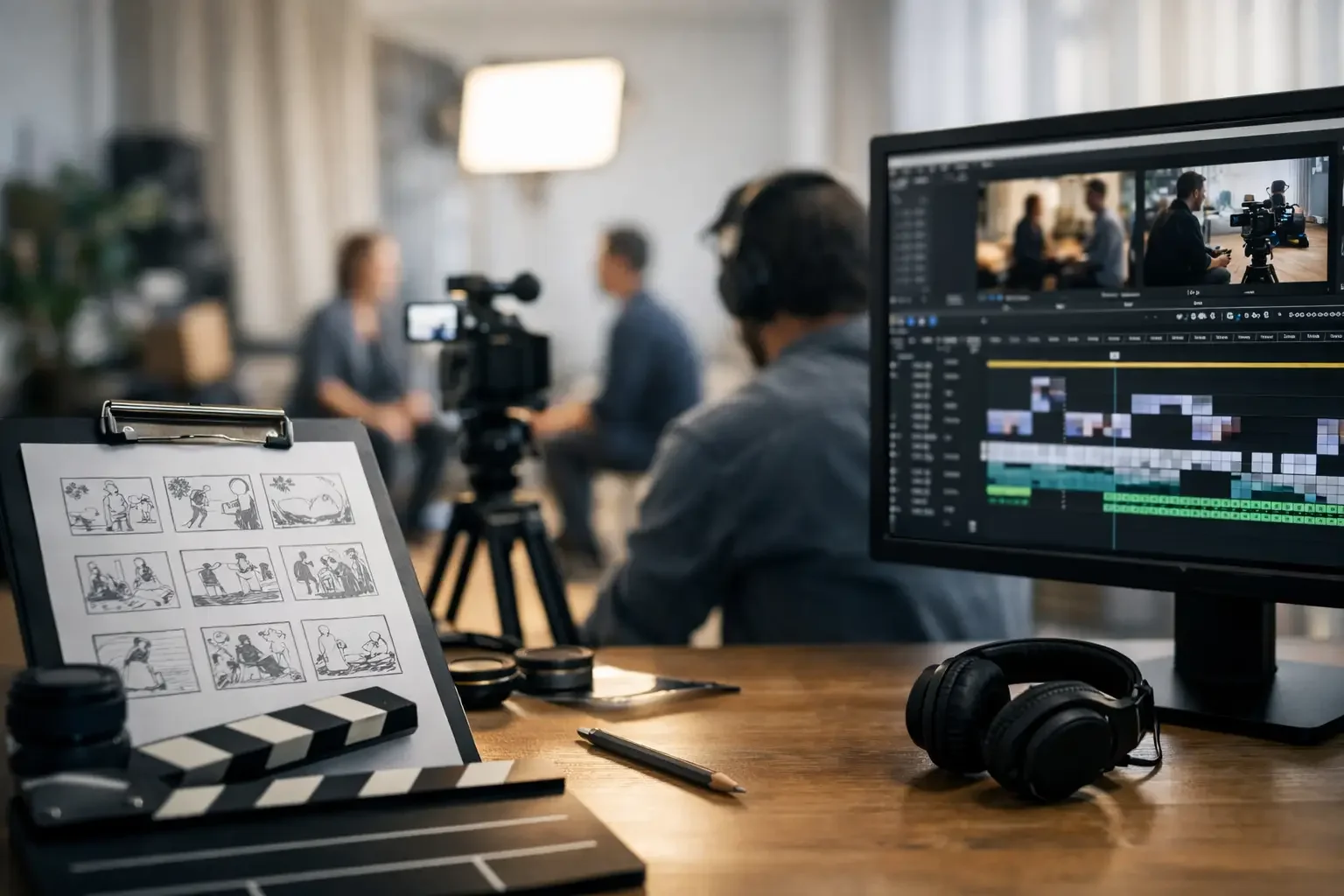
At Chisum Multimedia, our process can be brokend down to three core stages: pre-production, production, and post-production. That sounds simple, but each stage includes several moving parts, and the length of each one depends on the goals of the project.

A short testimonial video for a local business may move quickly. A brand story video with multiple interview subjects, several locations, and custom motion graphics will naturally require more time. Neither approach is wrong. The right timeline depends on the scope, the level of polish, and how the final video will be used.

In most cases, business video projects fall somewhere between two to three weeks from kickoff to final delivery. Smaller projects can land on the shorter end. More involved campaigns, especially those tied to product launches or larger marketing initiatives, may need longer.

Pre-production sets the pace

Pre-production is where the timeline is won or lost. This phase often takes one to three weeks, and it is the part many businesses underestimate because the camera is not rolling yet. Still, this is where the strategy gets defined and the production team creates the plan that keeps the project efficient.

At this stage, the team usually works through goals, audience, message, creative direction, logistics, and scheduling. If the video needs a script, interview prompts, shot list, location planning, or talent coordination, those details happen here. A clear pre-production process shortens the rest of the project because the crew arrives on shoot day knowing exactly what they need to capture.

This is also where client responsiveness matters. If decision-makers are quick to review concepts, approve scripts, and confirm schedules, the project moves. If approvals sit for several days at a time, the timeline stretches even before filming begins.

Common pre-production tasks

Most business video projects include a discovery conversation, concept development, scheduling, and production planning. Some also need scripting, storyboarding, location scouting, or coordination with internal stakeholders.

For organizations with multiple departments involved, this phase can take longer simply because more people need to weigh in. That is normal. The key is having one primary point of contact who can gather feedback and keep approvals organized.

Production is short, but highly coordinated

The production phase is the shoot itself. This may last half a day, a full day, or several days depending on the project. In many corporate and marketing video projects, filming is the shortest phase on the calendar, but it requires the most coordination.

A one-location interview shoot with supporting footage can often be completed in a day. On the other hand, a video that includes customer interviews, workplace footage, executive messaging, and multiple branded scenes may require two or more shoot days.

This is one reason the timeline cannot be judged by the shoot date alone. A client may see a one-day production and assume delivery is right around the corner, but the footage captured that day still needs to be organized, edited, refined, and approved.

What can affect shoot-day timing

Location availability, employee schedules, weather, room setup, and talent readiness all affect production timing. If the project involves healthcare environments, active offices, manufacturing floors, or customer-facing spaces, filming may need to work around operational realities.

That does not make the timeline unpredictable. It just means experienced planning matters. A professional team builds a production schedule that respects the client’s business while still capturing what the video needs.

Post-production is where the story takes shape

Post-production usually takes one to four weeks, depending on complexity and revision rounds. This phase includes footage organization, editing, music selection, audio cleanup, color correction, graphics, and final exports.

For many clients, this is the part that feels longest because the project becomes less visible after the shoot. But this is where the raw material becomes a strategic marketing asset. The pacing, messaging, visual flow, and polish all come together here.

A simple edit with one interview, light b-roll, and basic branding can move quickly. A more layered project with motion graphics, multiple interview angles, subtitles, or several deliverables for different platforms will take longer. The stronger the finish, the more care this stage requires.

Revisions are part of the timeline

Most business video projects include at least one or two rounds of revisions. That is healthy. Clients should have the chance to refine language, visual emphasis, or brand details before final delivery.

However, revisions can either be efficient or they can add a week or more. Consolidated feedback helps. When one person gathers team comments and sends a clear revision list, the editor can make changes efficiently. When feedback arrives in separate emails from several stakeholders with conflicting opinions, progress slows.

A realistic timeline for most business video projects

If you want a practical benchmark, many branded video projects follow a structure like this:

Pre-production often takes 1-2 weeks. Production may take 1-2 days. Post-production usually takes 1-3 weeks, depending on the edit and approval pace.

That means a realistic total timeline for many projects is around 3-5 weeks. Some move faster. Some need more time. If your company is planning around an event, campaign launch, or seasonal promotion, it is wise to start earlier than you think you need to.

A rushed project can still be completed, but there are trade-offs. You may have fewer concept options, tighter shoot windows, or less time for revisions. Sometimes that is acceptable. Sometimes it weakens the final product. The best timeline is not the shortest one. It is the one that gives the project enough room to be strategic and well executed.

What makes a video production process timeline longer or shorter

Project scope is the biggest factor. A single final video is simpler than a campaign with cutdowns for social, website, and paid advertising. More filming days, more locations, and more custom creative elements all increase the timeline.

Client availability also matters. Fast scheduling, quick approvals, and a clear decision-maker can shorten the process considerably. So can strong preparation from the client side, such as having interview subjects confirmed, locations ready, and brand messaging already defined.

On the other hand, added complexity tends to lengthen the timeline. Legal review, leadership sign-off, compliance requirements, and last-minute direction changes are common reasons a project extends beyond the original target date.

None of this means longer is bad. It simply means the schedule should match the project. A company investing in a flagship brand video should expect more care and collaboration than it would for a quick internal update.

How to keep your project on schedule

The fastest way to improve a timeline is to make decisions early. Know what the video needs to accomplish, who the audience is, where the video will live, and who has approval authority. That clarity prevents expensive backtracking later.

It also helps to gather internal stakeholders before the project begins. If marketing wants one message, leadership wants another, and sales needs a different outcome, that tension will show up during revisions. Aligning goals upfront protects both the timeline and the quality of the final video.

Choosing an experienced production partner also makes a difference. A team that understands business communication, not just camera work, can guide the process, anticipate roadblocks, and keep things moving without sacrificing quality. That is especially valuable for organizations that want the process to feel organized and low-stress.

For businesses across Middle Tennessee, that balance matters. You want a video that looks excellent, supports your marketing goals, and does not create unnecessary friction for your team. Chisum Multimedia approaches production with that in mind, combining visual craftsmanship with a process built to be smooth and dependable.

Timing should serve the strategy

A good video production process timeline is not about filling days on a calendar. It is about giving each phase enough space to do its job well. Strategy needs time to get clear. Production needs time to be coordinated. Editing needs time to shape the story into something your audience will remember.

If you are planning a video for your business, the smartest move is to work backward from your deadline and leave room for thoughtful decisions. The strongest videos are rarely the ones made in the biggest hurry. They are the ones built with purpose, precision, and a plan that respects both the creative process and your business goals.

Richard Chisum