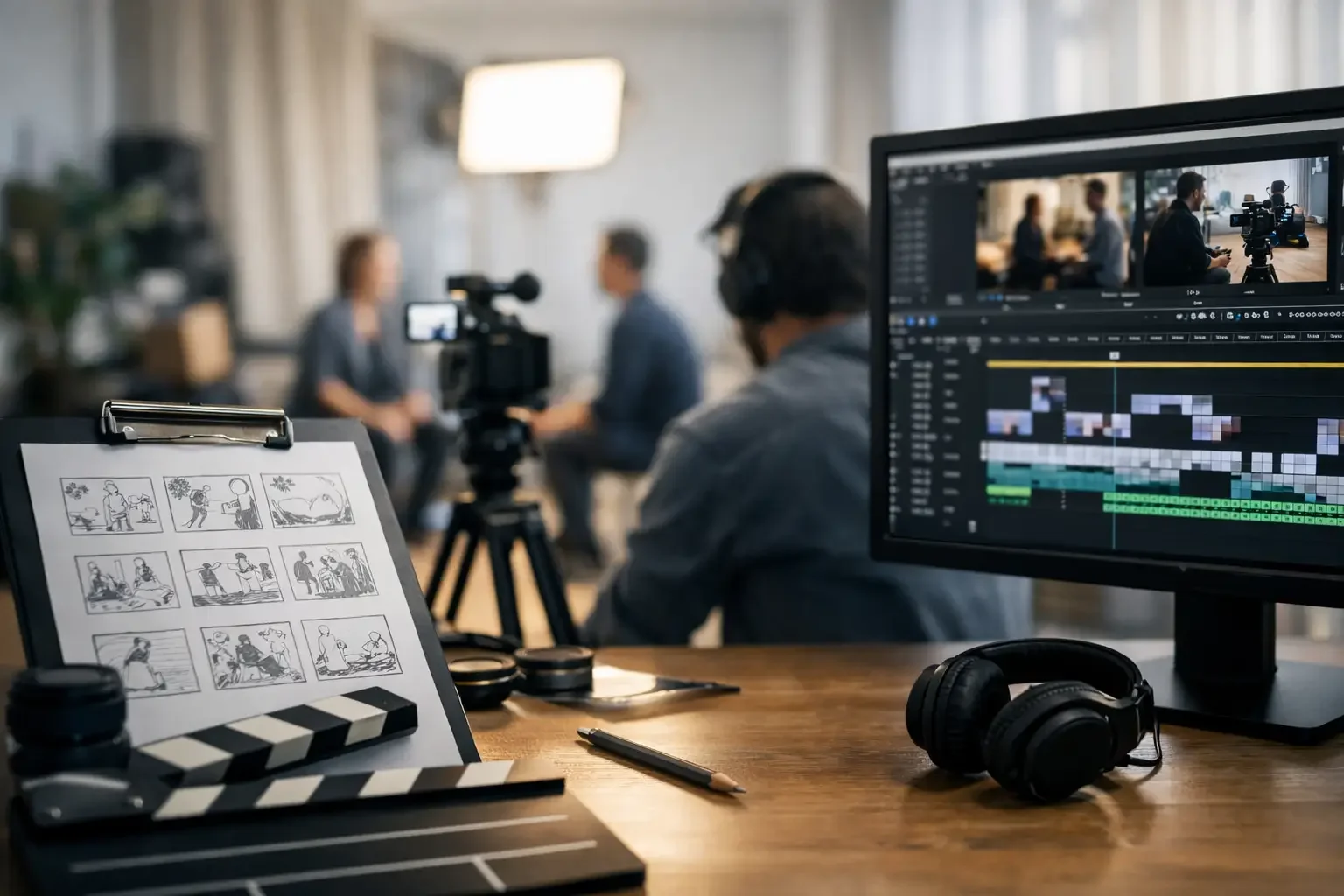
Video Production Process Timeline Explained

A strong marketing video can look effortless on screen, but the work behind it follows a very real schedule. If you are planning branded content for your company, understanding the video production process timeline helps you set better expectations, avoid rushed decisions, and keep your campaign on track.

For most businesses, the real question is not just how long a video takes. It is why the timeline takes that long, what can speed it up, and where delays usually happen. A polished video is rarely built in a single shoot day. It moves through strategy, planning, production, editing, and approvals, with each phase affecting the next.

What a video production process timeline usually includes

At Chisum Multimedia, our process can be brokend down to three core stages: pre-production, production, and post-production. That sounds simple, but each stage includes several moving parts, and the length of each one depends on the goals of the project.

A short testimonial video for a local business may move quickly. A brand story video with multiple interview subjects, several locations, and custom motion graphics will naturally require more time. Neither approach is wrong. The right timeline depends on the scope, the level of polish, and how the final video will be used.

In most cases, business video projects fall somewhere between two to three weeks from kickoff to final delivery. Smaller projects can land on the shorter end. More involved campaigns, especially those tied to product launches or larger marketing initiatives, may need longer.

Pre-production sets the pace

Pre-production is where the timeline is won or lost. This phase often takes one to three weeks, and it is the part many businesses underestimate because the camera is not rolling yet. Still, this is where the strategy gets defined and the production team creates the plan that keeps the project efficient.

At this stage, the team usually works through goals, audience, message, creative direction, logistics, and scheduling. If the video needs a script, interview prompts, shot list, location planning, or talent coordination, those details happen here. A clear pre-production process shortens the rest of the project because the crew arrives on shoot day knowing exactly what they need to capture.

This is also where client responsiveness matters. If decision-makers are quick to review concepts, approve scripts, and confirm schedules, the project moves. If approvals sit for several days at a time, the timeline stretches even before filming begins.

Common pre-production tasks

Most business video projects include a discovery conversation, concept development, scheduling, and production planning. Some also need scripting, storyboarding, location scouting, or coordination with internal stakeholders.

For organizations with multiple departments involved, this phase can take longer simply because more people need to weigh in. That is normal. The key is having one primary point of contact who can gather feedback and keep approvals organized.

Production is short, but highly coordinated

The production phase is the shoot itself. This may last half a day, a full day, or several days depending on the project. In many corporate and marketing video projects, filming is the shortest phase on the calendar, but it requires the most coordination.

A one-location interview shoot with supporting footage can often be completed in a day. On the other hand, a video that includes customer interviews, workplace footage, executive messaging, and multiple branded scenes may require two or more shoot days.

This is one reason the timeline cannot be judged by the shoot date alone. A client may see a one-day production and assume delivery is right around the corner, but the footage captured that day still needs to be organized, edited, refined, and approved.

What can affect shoot-day timing

Location availability, employee schedules, weather, room setup, and talent readiness all affect production timing. If the project involves healthcare environments, active offices, manufacturing floors, or customer-facing spaces, filming may need to work around operational realities.

That does not make the timeline unpredictable. It just means experienced planning matters. A professional team builds a production schedule that respects the client’s business while still capturing what the video needs.

Post-production is where the story takes shape

Post-production usually takes one to four weeks, depending on complexity and revision rounds. This phase includes footage organization, editing, music selection, audio cleanup, color correction, graphics, and final exports.

For many clients, this is the part that feels longest because the project becomes less visible after the shoot. But this is where the raw material becomes a strategic marketing asset. The pacing, messaging, visual flow, and polish all come together here.

A simple edit with one interview, light b-roll, and basic branding can move quickly. A more layered project with motion graphics, multiple interview angles, subtitles, or several deliverables for different platforms will take longer. The stronger the finish, the more care this stage requires.

Revisions are part of the timeline

Most business video projects include at least one or two rounds of revisions. That is healthy. Clients should have the chance to refine language, visual emphasis, or brand details before final delivery.

However, revisions can either be efficient or they can add a week or more. Consolidated feedback helps. When one person gathers team comments and sends a clear revision list, the editor can make changes efficiently. When feedback arrives in separate emails from several stakeholders with conflicting opinions, progress slows.

A realistic timeline for most business video projects

If you want a practical benchmark, many branded video projects follow a structure like this:

Pre-production often takes 1-2 weeks. Production may take 1-2 days. Post-production usually takes 1-3 weeks, depending on the edit and approval pace.

That means a realistic total timeline for many projects is around 3-5 weeks. Some move faster. Some need more time. If your company is planning around an event, campaign launch, or seasonal promotion, it is wise to start earlier than you think you need to.

A rushed project can still be completed, but there are trade-offs. You may have fewer concept options, tighter shoot windows, or less time for revisions. Sometimes that is acceptable. Sometimes it weakens the final product. The best timeline is not the shortest one. It is the one that gives the project enough room to be strategic and well executed.

What makes a video production process timeline longer or shorter

Project scope is the biggest factor. A single final video is simpler than a campaign with cutdowns for social, website, and paid advertising. More filming days, more locations, and more custom creative elements all increase the timeline.

Client availability also matters. Fast scheduling, quick approvals, and a clear decision-maker can shorten the process considerably. So can strong preparation from the client side, such as having interview subjects confirmed, locations ready, and brand messaging already defined.

On the other hand, added complexity tends to lengthen the timeline. Legal review, leadership sign-off, compliance requirements, and last-minute direction changes are common reasons a project extends beyond the original target date.

None of this means longer is bad. It simply means the schedule should match the project. A company investing in a flagship brand video should expect more care and collaboration than it would for a quick internal update.

How to keep your project on schedule

The fastest way to improve a timeline is to make decisions early. Know what the video needs to accomplish, who the audience is, where the video will live, and who has approval authority. That clarity prevents expensive backtracking later.

It also helps to gather internal stakeholders before the project begins. If marketing wants one message, leadership wants another, and sales needs a different outcome, that tension will show up during revisions. Aligning goals upfront protects both the timeline and the quality of the final video.

Choosing an experienced production partner also makes a difference. A team that understands business communication, not just camera work, can guide the process, anticipate roadblocks, and keep things moving without sacrificing quality. That is especially valuable for organizations that want the process to feel organized and low-stress.

For businesses across Middle Tennessee, that balance matters. You want a video that looks excellent, supports your marketing goals, and does not create unnecessary friction for your team. Chisum Multimedia approaches production with that in mind, combining visual craftsmanship with a process built to be smooth and dependable.

Timing should serve the strategy

A good video production process timeline is not about filling days on a calendar. It is about giving each phase enough space to do its job well. Strategy needs time to get clear. Production needs time to be coordinated. Editing needs time to shape the story into something your audience will remember.

If you are planning a video for your business, the smartest move is to work backward from your deadline and leave room for thoughtful decisions. The strongest videos are rarely the ones made in the biggest hurry. They are the ones built with purpose, precision, and a plan that respects both the creative process and your business goals.

Richard Chisum
What's the Difference Between a Corporate Video and a Commercial Production?

A lot of video projects get slowed down before the camera even comes out. The brief says one thing, the stakeholders mean another, and someone eventually asks the question that should have come first: are we creating a corporate video or a commercial? That distinction matters because corporate video vs commercial production is not just a creative choice. It affects strategy, budget, timeline, distribution, and what success should look like when the project is finished.

For businesses trying to grow, clarify their message, or improve marketing performance, choosing the right format can save time and prevent a lot of expensive rework. Both formats can look polished. Both can tell a compelling story. But they are built for different jobs.

Corporate video vs commercial production: the core difference

The simplest way to think about it is this: a corporate video is usually designed to inform, explain, build trust, or support communication goals, while a commercial is built to persuade quickly and drive a specific audience action.

Corporate videos often live on company websites, sales pages, internal platforms, social channels, recruiting pages, trade show displays, and email campaigns. They tend to give the viewer more context. A company overview video, a brand story film, a recruiting piece, a testimonial video, or an internal culture video all fall into this category.

Commercial production is usually more tightly focused on promotion. A commercial is often shorter, more campaign-driven, and built around audience attention. It may run as a TV spot, connected TV ad, pre-roll ad, paid social ad, or streaming placement. Its job is to create a clear impression fast and move the viewer toward awareness, interest, or conversion.

That does not mean corporate video is soft or commercial production is flashy by default. Either one can be emotional, polished, cinematic, or highly strategic. The real difference is intent.

When a corporate video is the better choice

If your audience needs to understand who you are, what you do, or why they should trust you, a corporate video is often the better fit. This format gives your message room to breathe. It allows you to combine interviews, b-roll, process footage, voiceover, testimonials, and branding in a way that builds credibility over time.

For example, a healthcare practice may need to put patients at ease before they book. A manufacturing company may need to show its capabilities to prospects who are comparing vendors. A nonprofit may need to explain its mission to donors, board members, and community partners. In each case, the viewer is not just asking, "Should I buy?" They are also asking, "Can I trust this organization?" and "Do I understand what makes them different?"

Corporate video works well when your sales process is longer, your service is more complex, or your reputation plays a major role in the decision. It is also useful when the same video needs to support multiple touchpoints, from your homepage to presentations to social media clips.

When commercial production makes more sense

Commercial production tends to be the stronger choice when speed, attention, and a direct call to action matter most. If you are launching a campaign, promoting a service, advertising a seasonal offer, or trying to increase reach with paid media, a commercial is often the right tool.

Commercials are built to do a lot in a short amount of time. They usually rely on a sharper concept, tighter scripting, faster pacing, and stronger audience targeting. The message has to land quickly because the viewer may give you only a few seconds.

That creates a different kind of discipline. Every line, shot, and edit decision has to support the core objective. There is less room for background information and more pressure to create an immediate response.

For some brands, that is exactly what the moment calls for. If a business already has strong brand awareness and needs campaign creative that generates traffic or leads, commercial production can deliver more direct marketing value.

The biggest differences in approach

The planning process for both formats overlaps, but the priorities shift.

With corporate video, discovery usually centers on messaging, brand positioning, audience trust, and how the content will be used across channels. Stakeholders may include leadership, marketing, HR, operations, or development teams. The production has to represent the organization accurately and professionally, often for a longer shelf life.

With commercial production, planning leans harder into campaign strategy, audience behavior, ad placement, runtime requirements, and performance goals. The creative may be more stylized or concept-driven because the piece needs to compete for attention in crowded media environments.

This is one reason businesses sometimes ask for a "commercial" when they actually need a corporate brand video, or request a corporate video when they really want an ad. The visual style might sound similar in conversation, but the production strategy behind each one is different.

Budget, timeline, and expectations

Many clients assume commercials always cost more. Sometimes they do, especially if the concept involves actors, locations, heavy art direction, or multiple deliverables for an ad campaign. But that is not a universal rule.

A corporate video can also be a significant production if it includes several shoot days, executive interviews, aerial footage, scripted messaging, motion graphics, and multiple edits for different departments or platforms. Budget depends less on the label and more on scope.

The more useful question is whether the investment matches the business goal. If you need a foundational asset that supports sales, recruiting, trust-building, and brand positioning for months or years, a corporate video can provide long-term value well beyond one campaign. If you need a targeted piece of creative designed to fuel media spend and prompt action now, a commercial may be the better investment.

Timelines also vary. Corporate videos often require more internal review because they represent the company at a broad level and may involve several decision-makers. Commercials can move faster if the campaign is tightly defined, but they can also become complex when multiple ad versions, audience segments, or platform specs are involved.

Which one performs better?

It depends on what you are measuring.

A commercial may outperform on click-through rate, ad recall, reach, or campaign conversions. A corporate video may outperform on time on page, sales enablement, meeting conversion, recruiting engagement, or overall brand trust. Comparing them without context can lead to the wrong conclusion.

A polished brand story video on your website should not be judged by the same standard as a 15-second ad placed in a paid social campaign. They serve different points in the customer journey.

This is where a strategic production partner becomes valuable. The strongest video results usually come from aligning the format with the business objective before production starts, not trying to retrofit the objective after the edit is done.

In many cases, the right answer is both

Some of the best video strategies do not force an either-or decision. A business might produce a core corporate video that defines the brand, explains the value proposition, and builds trust, then create shorter commercial-style edits for paid campaigns and social promotion.

That approach gives you consistency without wasting footage or effort. One production can support multiple goals when it is planned correctly from the start. Interviews can anchor the longer-form corporate piece. More energetic, concise cuts can support ads. Testimonial moments can become standalone assets. Visual coverage can be repurposed across web, sales, recruiting, and social channels.

For businesses in Middle Tennessee that want professional video content without adding unnecessary complexity, that kind of planning matters. A streamlined process is not just convenient. It protects the investment and helps every asset work harder.

How to choose the right format for your next project

Start with the outcome, not the terminology. Ask what the viewer needs to think, feel, or do after watching. If the answer involves understanding your company, trusting your team, or seeing the bigger picture, a corporate video is likely the right path. If the answer is centered on immediate action, campaign response, or promotion at scale, commercial production may be the better fit.

Then look at where the video will live. A homepage hero section, an about page, a sales presentation, and a recruiting campaign usually call for a different structure than a paid ad placement. Distribution shapes creative decisions more than many businesses expect.

Finally, think beyond launch day. The best video projects are not just beautiful. They are useful. They fit your marketing strategy, reflect your brand accurately, and continue pulling their weight after the initial rollout. That is where experienced planning, clear messaging, and dependable production make the difference.

If you are choosing between corporate video and commercial production, the smartest move is to define the job first and build the creative around it. When the format matches the goal, the final piece does more than look good on screen. It starts doing real work for your business.

Richard Chisum