
Corporate Video Pre Production Checklist

At Chisum Multimedia, we've found that a corporate video can look polished on shoot day and still miss the mark if the planning behind it is weak. That is why our pre-production checklist matters so much. Before cameras roll, the real work is making sure the message is clear, the logistics are handled, and every decision supports a business goal.

For companies investing in video as a marketing or communication tool, pre-production is where risk goes down and results go up. It is the stage that protects your budget, your timeline, and your brand reputation. It also makes the production process feel far more manageable for busy teams who do not have time for avoidable back-and-forth.

Why a corporate video pre production checklist matters

Most video problems do not start on set. They start earlier, when nobody agrees on the audience, when the script tries to say too much, or when a key approval gets delayed until the last minute. A checklist brings structure to a creative process that can otherwise become expensive and unpredictable.

It also helps leadership teams and marketing departments stay aligned. A founder may want a broad brand piece, while a sales team may need a sharper value proposition and shorter cutdowns for campaigns. Neither approach is wrong, but those differences need to be sorted out before production begins.

Strong pre-production creates room for better creative work. When the basics are clear, your production partner can focus on performance, visuals, pacing, and the kind of details that make a video feel credible and memorable.

Start with the goal, not the camera

Every effective video begins with a business objective. That might be generating leads, explaining a service, recruiting talent, supporting a fundraising effort, or building trust with a local audience. If the goal is vague, the video usually becomes vague too.

This is the first question to settle: what should this video do for the organization? A homepage brand film has a different job than a testimonial, internal training video, or event recap. The clearer the purpose, the easier it is to shape the script, interview questions, visuals, and distribution plan.

At this stage, define the target audience with some precision. “Potential customers” is usually too broad to be useful. A healthcare practice speaking to new patients needs a different tone than a manufacturing company speaking to procurement teams or job candidates. The audience affects language, examples, setting, and even who should appear on camera.

Build the message before you build the shot list

One of the most common pre-production mistakes is focusing on visual ideas before the core message is ready. Beautiful footage helps, but it cannot rescue a confused story.

Start with the main takeaway. If a viewer watches the video and remembers one thing, what should it be? From there, support that point with two or three key messages. That is usually enough. Trying to fit every service, credential, and differentiator into one piece often weakens all of them.

This is where script development or structured talking points come in. Not every corporate video needs a word-for-word script. Interviews, testimonials, and documentary-style pieces often perform better with guided prompts. Still, there should be a plan for what needs to be said, who will say it, and how it will flow.

If multiple stakeholders are involved, get message approval early. It is much easier to revise a draft than to reshoot an interview because legal, leadership, or marketing had different expectations.

Confirm deliverables before production starts

A good corporate video pre production checklist should always include the final assets, not just the filming day. That sounds obvious, but it gets missed often.

Ask what the team actually needs. Is the project one flagship brand video, or does it also need 30-second cutdowns, social clips, vertical edits, stills, captions, and alternate versions for different audiences? A company may think it is planning one video, when in reality it needs a full content package.

This matters because deliverables shape production decisions. If you need short-form clips for social, the crew may capture additional framing options. If the video will run on a website with no sound on autoplay, captions and visual clarity become more important. If the content will support an ad campaign, the opening seconds need extra attention.

Choose the right people on camera

Not everyone who knows the business well will come across naturally on video. And not every polished speaker is the right messenger for your audience. The best on-camera choices usually combine credibility, clarity, and comfort.

For some companies, that is the founder or CEO. For others, it may be a department leader, a customer, a provider, or a team member who reflects the day-to-day client experience. The right mix depends on the story being told.

Prepare participants ahead of time. They should know the goal of the video, the general topics they will cover, what to wear, and how much time to set aside. This lowers anxiety and leads to better, more natural responses. It also keeps the production day efficient, which matters when your team has a business to run.

Lock down the practical details early

This is where good intentions turn into a workable production plan. Once messaging and participants are set, the logistics need just as much attention.

Location is a big one. Filming at your office can add authenticity, but it may also introduce noise, tight spaces, inconsistent lighting, and interruptions. An on-site shoot can work beautifully with planning, but not every environment is camera-friendly. In some cases, filming in a controlled location saves time and creates a cleaner final product.

Scheduling also deserves more strategy than people expect. Build around the people who are hardest to book, not the easiest. If a physician, executive, or client testimonial subject has limited availability, start there. Then leave margin in the schedule. Corporate shoots often run into small delays, and a little buffer can prevent a stressful day.

Wardrobe, props, branding elements, and space prep should be confirmed before the crew arrives. If branded materials, products, signage, or samples need to appear on camera, gather them in advance. If the office will be filmed, tidy visible areas and remove anything confidential or off-brand.

Plan for approvals and decision-making

Many delays happen because too many people are involved too late. A smoother process starts by knowing who has final approval at each stage.

That may include messaging approval, script approval, scheduling sign-off, and final edit approval. The best setup is simple: one or two key decision-makers, clear deadlines, and one point of contact on the client side. When feedback comes from six directions at once, timelines stretch and the video often loses focus.

This is one reason experienced production partners put so much value on process. At Chisum Multimedia, for example, the planning phase is designed to reduce friction for clients, not create more of it. That kind of structure is not about red tape. It is about protecting quality while keeping the experience easy.

Think through compliance, permissions, and brand standards

Some businesses can move quickly here. Others need more care. Healthcare groups, schools, nonprofits, manufacturers, and larger organizations often have permission, legal, or privacy considerations that affect production.

If releases are needed for employees, clients, patients, or locations, sort that out before shoot day. If your industry has compliance standards around claims or representation, review language in advance. If there are brand guidelines for logos, colors, lower-thirds, or messaging, share them early so the production team can build with confidence.

It is better to catch these details now than to discover during editing that a key scene cannot be used or a message needs to be stripped out.

Use this checklist as a decision tool

A checklist should not just confirm tasks. It should help you make better choices. If timing is tight, maybe the project needs a more focused scope. If internal alignment is weak, maybe scripting needs another round before production is booked. If the audience is unclear, that issue should be solved before anyone starts talking about camera angles.

That is the real value of pre-production. It reveals what is ready and what is not.

A practical checklist for most corporate video projects should cover the objective, audience, key messages, call to action, format, deliverables, script or interview plan, on-camera participants, locations, schedule, wardrobe guidance, brand assets, approvals, and permissions. Some projects need more depth than others. A quick testimonial may be simple. A multi-day brand campaign will need tighter coordination. The level of planning should match the level of investment.

When pre-production is handled well, the entire project gets easier. The shoot runs smoother. The editing process stays focused. Stakeholders feel more confident. And the final video has a better chance of doing what it was meant to do in the first place.

If you are preparing for a business video, treat the planning stage as part of the creative work, not a delay before it. The strongest videos are usually built long before the first frame is recorded.
Richard Chisum
17 Best Questions for Testimonial Videos

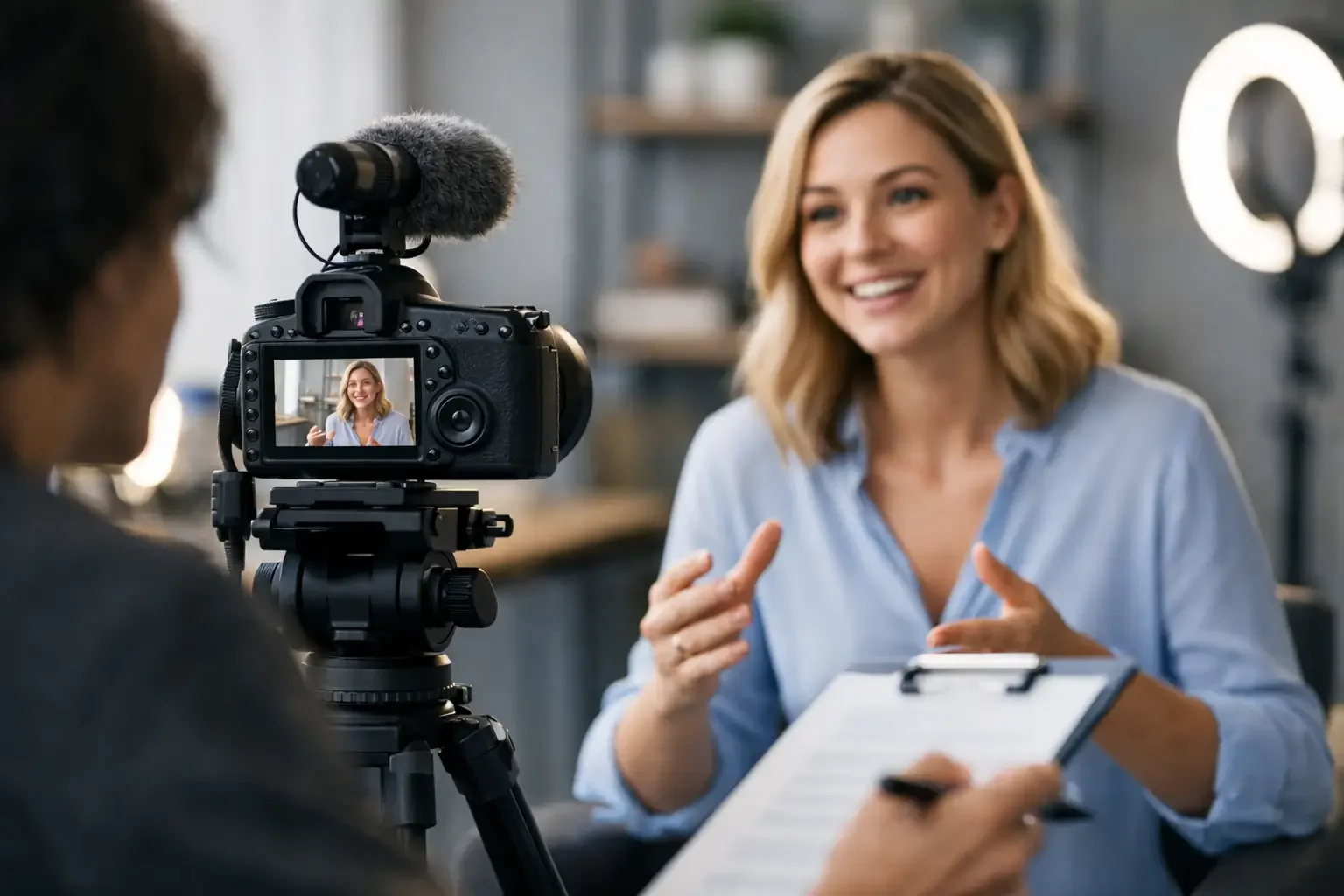
A testimonial video can look professional, sound clear, and still fall flat if the interview questions lead people into stiff, generic answers. That is why choosing the best questions for testimonial videos matters so much. The right prompts do more than collect praise. They uncover a believable story that helps future customers see themselves in the experience.

For most businesses, the goal is not simply to hear, “They were great to work with.” It is to capture what changed, why it mattered, and what made the decision feel worthwhile. At Chisum Multimedia, we believe that a strong testimonial gives your audience proof, but it also gives them context. That is what moves a video from nice to persuasive.

What the best questions for testimonial videos actually do

The best testimonial prompts are not fishing for compliments. They are designed to bring out specifics. Specifics create trust because they sound real. When someone explains the problem they had, what options they considered, and what happened after they hired your team, the viewer gets something useful to evaluate.

That is especially important for businesses selling professional services, healthcare, education, construction, or any offer where trust drives the sale. People want evidence that you understand their situation, communicate well, and deliver results. A testimonial video should answer those concerns without sounding scripted.

That is why broad questions like “How was your experience?” rarely carry the whole interview. They are fine as warmups, but they usually produce vague answers. Better questions invite a beginning, middle, and end.

Start with the problem, not the praise

A testimonial becomes compelling when the story starts before your company enters the frame. Ask what was happening before the client reached out. Ask what challenge they needed to solve. Ask what was frustrating, costly, unclear, or time-sensitive.

Questions in this stage might include: What was going on in your business before you contacted us? What problem were you trying to solve? What made this issue important to address now? Had you tried anything else before making a decision?

These questions do two things. First, they establish stakes. Second, they help future buyers recognize their own situation. If a prospect hears a client describe the same challenge they are dealing with, attention goes up immediately.

There is a balance here. You do not want to over-focus on pain if the brand should feel positive and forward-moving. But skipping the problem entirely usually weakens the story. Without contrast, the outcome has less weight.

Ask why they chose you

Once the challenge is clear, move into the decision-making process. This is where many testimonial videos miss a major opportunity. Buyers want to know why a client felt confident choosing one provider over another.

Ask: What stood out when you first learned about our company? Why did you feel we were the right fit? Was there anything about the process, communication, or approach that gave you confidence? What concerns did you have before getting started, and how were those addressed?

These questions reveal buying triggers. Sometimes it is your responsiveness. Sometimes it is your professionalism. Sometimes it is the feeling that the team understood the assignment quickly and made the process easy. Those details help prospects overcome hesitation.

For a service-based business, this part often matters as much as the final result. People are not only buying the output. They are buying the experience of getting there.

Bring the process to life

The strongest testimonial videos do not jump straight from “we hired them” to “everything was amazing.” That creates a gap. Viewers want to understand what it was like to work with you.

Ask questions such as: What was the process like from your perspective? How did our team communicate throughout the project? Did anything surprise you in a positive way? How easy was it to move from planning to completion?

This section is where operational trust gets built. For many decision-makers, especially busy executives, marketing directors, and program leaders, friction matters. They may love the idea of video, but worry about the time commitment, logistics, or uncertainty around execution. If your client can say, in their own words, that the process was organized, professional, and easier than expected, that carries real weight.

This is also where a skilled interviewer helps. Good answers often come after a follow-up like, “Can you give me an example?” or “What made that stand out?” The first answer is often short. The second answer is usually the one you keep.

Focus on outcomes people can picture

Results are the center of any effective testimonial. But not every result needs to be a hard metric. If a client has measurable performance gains, that is excellent. If they do not, you can still capture meaningful business value.

Ask: What changed after the project was complete? How are you using the video now? What kind of response have you gotten from customers, staff, or stakeholders? Did this help with credibility, visibility, engagement, or sales conversations? Has the final product made your marketing easier?

The key is to make outcomes concrete. “It helped our brand” is weaker than “we now have a polished video our sales team can send to prospects.” “We loved it” is weaker than “the video gave us a professional way to explain who we are in under two minutes.”

It depends on the industry, of course. A healthcare practice may focus on trust and patient confidence. A nonprofit may talk about donor engagement or community awareness. A manufacturer may care more about sales support and recruiting. The best questions for testimonial videos leave room for different kinds of value while still pushing toward specifics.

Make room for emotion without forcing it

Business testimonials still need a human layer. Even in B2B settings, people make decisions emotionally and justify them logically. If every answer sounds purely functional, the video may feel credible but forgettable.

Ask a few prompts that surface emotion naturally: How did you feel once you saw the finished video? What did it mean to finally have this project done right? What part of the experience stood out most to you personally? Would you describe the impact this had on your team or organization?

These questions work best when they are not overused. If every prompt asks how someone felt, the interview can start to sound forced. But one or two well-timed emotional questions can add warmth and authenticity.

End with the recommendation

A direct recommendation is still valuable, but it should come at the end, after the story has earned it. By that point, the viewer has already heard the challenge, the decision, the process, and the outcome.

Ask: Who would you recommend us to? What would you say to someone considering working with us? Would you choose us again for a future project?

These questions often generate strong closing lines. They work because the recommendation is now supported by context. It is not empty praise. It is a conclusion based on experience.

A simple question set that works

If you need a reliable structure, these 17 questions cover most testimonial interviews without making the conversation feel rigid:

  • What does your company or organization do?

  • What challenge were you facing before you contacted us?

  • Why was it important to solve that problem?

  • Had you explored other options before choosing us?

  • What stood out about our team from the beginning?

  • Why did you feel we were the right fit?

  • Did you have any concerns before getting started?

  • How were those concerns addressed?

  • What was the process like working with us?

  • How did our team communicate throughout the project?

  • What surprised you in a positive way?

  • What was your reaction to the final result?

  • How are you using the finished video or content now?

  • What impact has it had on your business or organization?

  • Have you received any feedback from customers, staff, or stakeholders?

  • What would you say to someone considering working with us?

  • Would you recommend us, and if so, to whom?

You do not need to ask every question in every shoot. In fact, you probably should not. The best interviews feel like conversations, not checklists. A good producer will choose the questions that fit the client, the audience, and the marketing goal.

A few mistakes to avoid

Leading questions are the biggest problem. If you ask, “How amazing was the experience?” you are asking for a commercial, not a real answer. Keep questions open enough for clients to respond in their own voice.

Another common mistake is asking for too much detail too early. Let the speaker warm up. Start with easy context questions before moving into results and recommendation.

It is also worth avoiding too many yes-or-no prompts. Those tend to stop momentum. If you ask, “Were you happy with the final product?” the likely answer is “yes,” and now you have to rescue the moment. Ask instead, “What stood out to you about the final product?”

For businesses that want testimonial videos to support marketing, sales, and brand credibility, thoughtful interviewing makes all the difference. At Chisum Multimedia, that strategic side of production matters just as much as image quality. The camera captures the moment, but the questions shape the message.

A good testimonial does not sound rehearsed. It sounds clear, honest, and specific enough that the next customer can picture saying yes.

Richard Chisum