
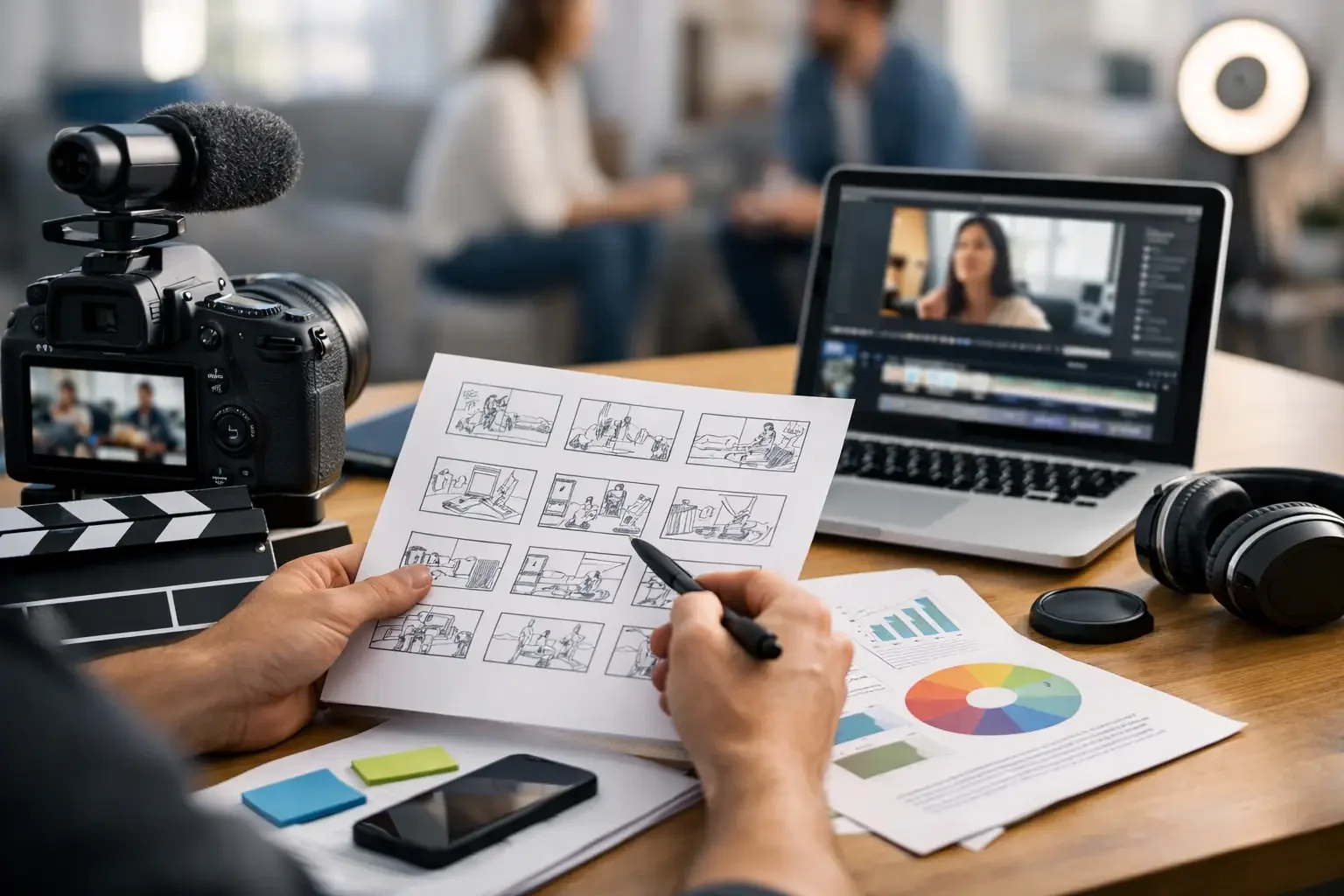
Marketing Video Planning Guide for Results

A lot of business videos go off track before the camera ever rolls. The idea sounds good, the team is excited, and then the project starts absorbing time, budget, and opinions without a clear plan. A strong planning guide from Chisum Multimedia will help you avoid that. It turns video from a creative guess into a practical marketing asset with a job to do.

For business owners and marketing leaders, that distinction matters. A polished video is nice to have. A polished video that supports sales, recruiting, fundraising, brand positioning, or customer education is far more valuable. Planning is what creates that difference.

Why a marketing video planning guide matters

Most companies do not struggle because they lack ideas. They struggle because they try to make one video accomplish everything at once. The result is often a vague message, a slow approval process, and a final piece that looks professional but feels unfocused.

Good planning creates alignment early. It helps your team decide what the video is actually for, who it needs to reach, and what action should happen after someone watches. That clarity makes every production decision easier, from scripting and interviews to locations, visuals, and length.

It also protects your investment. Video production involves real resources, whether you are creating a brand film, a customer testimonial, a recruiting piece, or a social campaign. The more intentional the plan, the more likely the final content will keep working long after launch.

Start with the business goal, not the video concept

The first question is not, โ€œWhat kind of video should we make?โ€ It is, โ€œWhat business problem are we trying to solve?โ€ That shift keeps the conversation strategic.

If your goal is awareness, you may need a short brand message designed to introduce your company and build trust quickly. If your goal is conversion, you may need a more focused piece that explains your offer, removes objections, or shows proof. If your goal is recruiting, the content should give people a clear sense of culture, expectations, and opportunity.

This is where many projects either sharpen up or drift. A leadership team may want a broad company story while the marketing team needs campaign-ready assets. Neither is automatically wrong. The issue is trying to force both goals into one deliverable. Sometimes one flagship video works. Sometimes the smarter move is planning a small content package that serves different stages of the funnel.

Define one primary audience

A video can appeal to more than one group, but it should be built for one primary viewer. That audience decision shapes the language, pacing, emotional tone, and level of detail.

A healthcare provider speaking to patients will need a different message than one speaking to physician referral partners. A nonprofit addressing donors will frame its story differently than one trying to recruit volunteers. A manufacturer talking to procurement teams should not sound like a lifestyle brand trying to win attention on Instagram.

When the audience is too broad, the message gets watered down. Strong video marketing feels direct because it is. It speaks to a specific person with a specific concern, and it gives them a clear reason to care.

Get specific about the message

Once the goal and audience are clear, the next step is message discipline. Most effective marketing videos can be traced back to one core idea. Not five. One.

That core idea might be that your company solves a costly problem faster than competitors. It might be that your organization changes lives in measurable ways. It might be that your team brings uncommon expertise with a service experience clients can trust. Whatever it is, the message needs to be stated in plain language before anyone starts writing a script.

This is also the right stage to decide what proof supports the message. Proof can come from customer outcomes, process visuals, team expertise, years in business, testimonials, certifications, or real-world examples. Without proof, a marketing video can sound polished but generic.

Choose the right video format for the goal

This is where strategy meets production. Different formats serve different purposes, and choosing the right one can save time and improve performance.

A brand overview video works well when you need a strong first impression on your website or in presentations. A testimonial video is often more persuasive when trust is the main hurdle. A service explainer helps when prospects do not fully understand what you do or why your process is different. Short-form campaign videos are useful when reach and repetition matter more than depth.

There is no universally best format. It depends on where the video will live and what the viewer needs at that moment. A homepage visitor may watch a 60- to 90-second overview. A social media audience may only give you a few seconds unless the opening is especially strong. A sales conversation may benefit from a more detailed case study or founder message.

Plan distribution before production

A common mistake is treating distribution as a post-production decision. In reality, platform and placement should shape the plan from the beginning.

If the video is meant for your website, it should quickly establish credibility and guide the viewer toward the next step. If it is meant for paid social, the opening has to earn attention immediately, often without sound. If your team will use it in email outreach or sales presentations, messaging and length may need to support a warmer, more informed audience.

This planning step also affects technical choices. Aspect ratio, run time, captions, cutdowns, and alternate edits are easier to build into the project upfront than to force in later. Businesses that want stronger return from video usually think beyond one hero edit. They plan for a set of usable assets.

Build a realistic production plan

A great concept can still get derailed by avoidable logistics. That is why the production plan matters just as much as the creative brief.

Start with the practical questions. Who needs to appear on camera? Which locations best support the story? What parts of your process should be filmed to create visual credibility? Are there compliance concerns, scheduling limitations, or stakeholder approvals that could slow things down?

This is also the time to decide how much structure the video needs. Some projects benefit from a full script. Others are stronger with guided interviews and a loose outline that lets real people sound natural. A scripted CEO message may feel controlled and efficient. A customer story may feel more authentic with conversational answers and documentary-style visuals. The right choice depends on the message and on-camera talent.

Set expectations for approvals and revisions

Video projects rarely stall because of cameras or editing software. They stall because too many people weigh in too late.

A clear approval process keeps momentum. Decide early who owns feedback, who has final approval, and what success looks like at each stage. That includes concept approval, script or interview direction, edit review, and final delivery.

This does not mean excluding important stakeholders. It means giving the project a manageable path. When feedback loops are too wide, videos tend to become safer, longer, and less effective. Strong creative work usually comes from clear leadership and well-timed collaboration.

Measure success the right way

Not every video should be judged by the same metric. Views can be useful, but they are not enough on their own. A recruiting video with fewer views but stronger applicant quality may outperform a broad awareness piece with higher reach. A testimonial video that shortens the sales cycle may deliver more value than a social clip with impressive engagement.

The best way to measure success is to tie the video back to its original job. Look at watch time, click-through behavior, lead quality, meeting conversions, campaign performance, or how often your team uses the asset in real conversations. A strong video should make part of your marketing or communication effort work better.

What smart planning really buys you

A good video production partner can make your brand look polished. A great one helps you make sharper decisions before production starts. That planning process reduces friction, protects your budget, and gives your team confidence that the final piece will do more than sit on a website.

For organizations across Middle Tennessee, that is often the real priority. They do not just need attractive footage. They need content that reflects the quality of their business, communicates value clearly, and supports growth. That is where a thoughtful marketing video planning guide becomes more than a checklist. It becomes the foundation for video that actually performs.

If you are considering your next video, slow down just enough to get the plan right. The shoot will feel easier, the edit will be stronger, and the final result will have a much better chance of earning attention for the right reasons.

Richard Chisum
The Importance of Promotional Videos for Small Businesses

A visitor lands on your website, scrolls for a few seconds, and leaves. That moment is where a promotional video from Chisum Multimedia can change the outcome. When it is done well, video gives people a fast, credible reason to keep paying attention. It shows who you are, what you do, and why your business is worth trusting before a sales conversation ever starts.

For many small businesses, that matters more than reach alone. You are not trying to entertain the entire internet. You are trying to help the right customer understand your value quickly and feel confident taking the next step.

Why a promotional video for small business matters

Small businesses often face the same challenge in different forms. You may offer excellent service, have strong reviews, and know your market well, yet still struggle to explain what makes your company different. A well-produced video closes that gap. It puts your team, your process, and your results into a format people can absorb in less than two minutes.

That speed is a real advantage. Prospective clients do not always read every page on a site or every line in a brochure. Video helps compress your message without making it feel thin. It combines visuals, voice, pace, and emotion in a way that static content cannot match.

It also builds trust faster. People want to see the business behind the brand. They want to know whether you look established, whether your team feels credible, and whether your communication is clear. In healthcare, professional services, home services, nonprofits, and local retail, those signals matter.

Still, not every video works. A polished piece with no clear message can underperform. A simple video with sharp positioning can outperform a bigger production. Quality matters, but strategy matters first.

What a good promotional video should actually do

A strong promotional video is not just a highlight reel. It should move the viewer from curiosity to clarity. That usually means answering a few key questions quickly. Who are you? What problem do you solve? Why should someone choose you instead of another option? What should they do next?

The best videos do this without sounding scripted in a stiff or overly sales-driven way. They feel confident, direct, and human. They create momentum. The viewer should come away with a clear sense of your business and a stronger reason to contact you.

That often requires restraint. Some businesses try to say everything at once, mentioning every service, every credential, and every audience they serve. The result is usually a crowded message. A better approach is to focus on the core value proposition and let the video support a specific business goal.

That goal might be generating inquiries, strengthening your homepage, supporting ad campaigns, improving social content, or giving your sales team a stronger brand asset to share. The right objective shapes the entire production.

Start with strategy, not just production

Before cameras come out, the business case needs to be clear. Who is this video for? Where will they watch it? What do they need to understand in order to take action?

A promotional video for small business can take many forms. A founder-led brand video may work well if trust in leadership is central to the buying decision. A customer-focused testimonial piece may be more effective if social proof drives conversions. A short overview video may fit best if your homepage needs a stronger introduction. There is no single correct format. It depends on the audience and the decision you are trying to influence.

This is where many businesses benefit from working with an experienced production partner. Good video is not only about lighting, editing, and camera work. It is about shaping a message so the finished piece supports real marketing performance.

What to include in your promotional video

Most successful business videos share a few essentials. They introduce the business clearly, show real people whenever possible, and create a believable picture of what it is like to work with you. That may include your team, your location, your process, customer interactions, product use, or service delivery.

The strongest content usually combines a concise narrative with supportive visuals. If someone is speaking on camera, the footage around that interview should reinforce the message instead of just filling space. When the visual story and spoken message line up, the video feels more convincing.

Tone matters too. A law firm, medical practice, local manufacturer, and boutique retailer should not all sound the same. Your video should reflect how your business actually serves clients. Professional does not mean generic. Warmth, confidence, and clarity often do more for credibility than heavy corporate language.

Common mistakes that weaken results

One of the most common mistakes is making the video too broad. If it tries to serve every platform, every audience, and every message, it often ends up weak everywhere. A more focused video tends to perform better because it knows what job it is there to do.

Another issue is overvaluing style and undervaluing substance. Cinematic visuals can absolutely elevate a brand, but beautiful footage alone does not create response. The script, interview direction, and structure need to do real work.

There is also the problem of poor fit. Some businesses invest in a highly polished video that does not match their customer journey. For example, a general brand piece may not help much if the real need is a set of short, targeted videos for sales outreach or social media campaigns. Production should follow strategy, not the other way around.

Finally, many companies underuse the asset after it is completed. A promotional video should not live in one spot and be forgotten. It can support your website, presentations, recruiting, email campaigns, digital ads, and social channels if it is planned with distribution in mind.

How long should a promotional video for small business be?

Shorter is usually better, but only up to a point. If the video is so brief that it fails to explain your value, it will not do much beyond creating surface-level awareness. If it runs too long without enough substance or pacing, viewers drop off.

For many small businesses, a primary brand or promotional piece in the 60 to 120 second range is a strong starting point. That is often enough time to communicate credibility, show personality, and guide the viewer toward action. Short cutdowns can then be created for social media, ads, or follow-up campaigns.

The right length depends on where the video will live and how warm the audience already is. Someone discovering your brand through a social ad usually needs a tighter message than someone already exploring your website.

What professional production changes

Professional video production brings more than better equipment. It improves clarity, pacing, and confidence on screen. It helps non-actors come across naturally. It gives structure to interviews, direction to visuals, and discipline to the final edit.

That matters because viewers often judge the business by the quality of the video. If the audio is weak, the editing feels rushed, or the message lacks focus, it can quietly reduce trust. On the other hand, a professionally crafted video signals that your business is established, thoughtful, and serious about how it presents itself.

For companies in Middle Tennessee competing in active local markets like Murfreesboro, Nashville, and Franklin, presentation can be a real differentiator. A strong video helps you look like the level of business you want to be.

Measuring whether the video is working

Success is not always viral reach. For most small businesses, a promotional video works when it improves the quality of attention you get. That can mean stronger homepage engagement, more qualified inquiries, better ad performance, smoother sales conversations, or clearer communication with prospective clients.

The right benchmark depends on the role the video plays. If it sits on your homepage, watch how it affects time on page, conversion behavior, and inquiry quality. If it is used in paid campaigns, track response and cost efficiency. If your sales team shares it directly, listen for whether prospects come into calls better informed.

Good video earns its value by making other parts of your marketing work harder.

Choosing the right partner for your video

If you are considering video, look beyond a reel. Ask how the team approaches messaging, planning, and business goals. Ask what the process feels like for clients. Ask how they help people on camera feel comfortable and how they think about using the final asset across multiple channels.

That combination of creative quality and dependable process is what turns production into a practical marketing investment. Businesses do not just need footage. They need a partner who can reduce friction, guide decisions, and deliver a final product that feels true to the brand and useful in the market.

At its best, a promotional video does more than make your business look good. It helps the right people understand you faster, trust you sooner, and feel ready to reach out.

Richard Chisum