
In House vs Agency Video Production
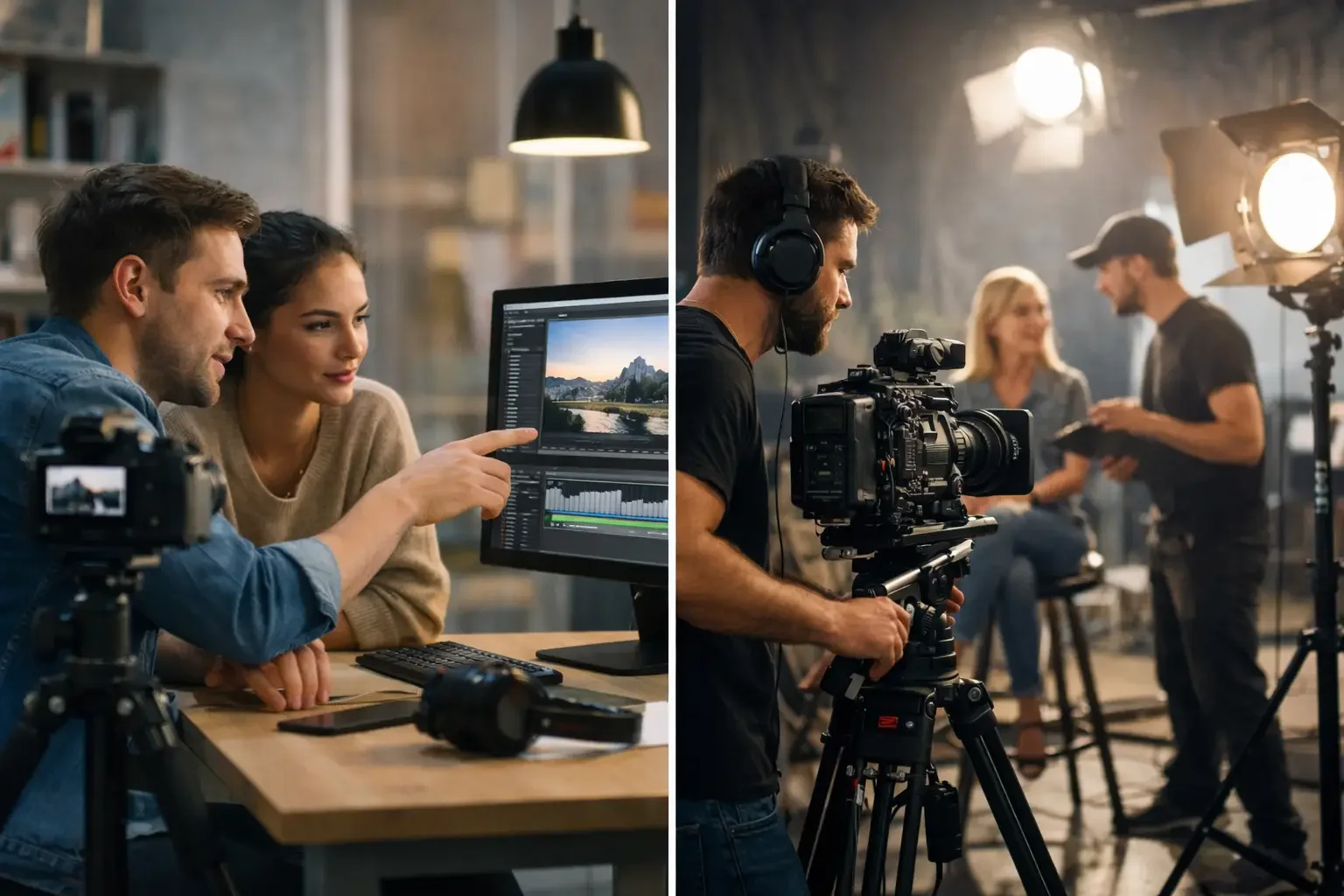
A marketing director needs a brand video in six weeks. A business owner wants monthly social clips without hiring a full creative team. A healthcare group needs interviews, b-roll, and messaging that feels polished and trustworthy. That is where the in house vs agency video production decision becomes less theoretical and much more practical.
For most businesses, this is not just a question of who holds the camera. It is a question of how video fits into growth, how much internal bandwidth you really have, and how much risk you want to carry inside your team. The right choice depends on your goals, your timeline, and the level of quality your brand needs to put into the market.
In house vs agency video production: what changes?
At a glance, the difference seems simple. In-house video production means your company manages video internally, whether that is one content creator, a small media team, or a broader marketing department with production capability. Agency video production means you hire an outside partner to concept, plan, shoot, and edit your content.
In reality, the gap is bigger than staffing. It affects strategy, creative perspective, production value, speed, consistency, and the amount of management required from your side. A business can absolutely build an internal team that creates excellent video. Plenty do. But many companies also underestimate how many moving parts professional video requires once the stakes move beyond quick internal content.
A polished marketing video is rarely just filming. It is messaging, scripting, location planning, lighting, audio, directing on-camera talent, shot selection, editing rhythm, brand alignment, and delivery formats that actually support campaigns. If any one of those parts slips, the final piece can feel less credible than the brand itself.
When in-house production makes sense
If your business needs a high volume of simple content, in-house can be the right move. This is especially true for companies producing frequent updates, recruiting clips, behind-the-scenes footage, social media snippets, or internal communications. In those cases, speed and convenience often matter more than cinematic polish.
An internal team also has immediate access to your people, your locations, and your daily operations. They are already immersed in your brand voice and approval process. That can shorten turnaround times for recurring content and reduce the back-and-forth that sometimes comes with outside production partners.
There is also a long-term investment argument. If video is central to your organization year-round, hiring in-house can make financial sense over time. Instead of paying per project, you build capability that stays with the company.
Still, there is a catch. In-house only works well when the team has the right mix of creative skill, technical knowledge, time, and leadership support. One talented employee with a camera is not the same as a fully functioning production operation. If that person is also handling social media, design, email campaigns, and events, video quality and consistency usually suffer first.
Where in-house teams often run into trouble
The biggest challenge is not equipment. It is capacity.
Video production takes more planning than many organizations expect. Pre-production alone can stall when internal teams are already stretched thin. Then filming gets delayed because the right stakeholders are unavailable, editing takes longer than planned, and revisions pile up because the project was not clearly shaped at the start.
There is also the issue of perspective. Internal teams know the company well, which helps with access and familiarity, but sometimes hurts clarity. They may be too close to the message. What feels obvious internally can be confusing to an outside audience. Strong marketing video needs distance, not just access.
Quality control becomes another pressure point. Audio, lighting, pacing, graphics, and storytelling structure all affect whether a video feels credible. Viewers may not know why something looks off, but they can feel it. For brands in competitive markets, that matters more than ever.
When agency video production is the smarter choice
Agency production is often the stronger option when the content carries brand weight. If the video will live on your homepage, support a campaign, represent your company to prospects, explain a service, or help build trust with a wider audience, it deserves more than a quick internal execution.
A strong agency brings experience, process, and outside perspective. They know how to shape a message for viewers who do not already know your business. They can guide creative decisions, solve production issues before they become delays, and keep the project moving without adding stress to your team.
This is especially valuable for organizations that want high-impact work but do not want to manage every production detail themselves. Instead of piecing together freelancers, gear, scripts, and schedules, you have a dedicated partner handling the moving parts.
There is also a quality advantage that is difficult to ignore. Professional production teams are built around specialized roles. That means better direction, stronger visuals, cleaner sound, more intentional editing, and a final product that feels aligned with the level of your brand.
For many Middle Tennessee businesses, that difference matters. Whether you are speaking to customers, patients, donors, recruits, or stakeholders, your video often shapes first impressions before anyone starts a conversation.
Cost is more nuanced than it looks
One reason companies lean toward in-house is cost. On paper, internal production can seem cheaper because you are avoiding agency fees. But that comparison is usually too narrow.
In-house production costs include salaries, benefits, equipment, software, training, management time, and the opportunity cost of pulling team members away from other priorities. If your team needs to learn on the job, the hidden cost grows fast. So does the risk of producing content that underperforms and needs to be redone.
Agency pricing is more visible, which can make it feel more expensive upfront. But it often includes strategic planning, crew, equipment, editing, creative direction, and a defined process that gets the work done efficiently. When a video needs to generate leads, improve credibility, support a launch, or live as a flagship brand asset, paying for expertise can be the more cost-effective decision.
This is where businesses should ask a better question. Not "Which option is cheaper?" but "What level of video does this project need to achieve its purpose?"
If the answer is quick, timely, and disposable, in-house may be enough. If the answer is persuasive, lasting, and brand-defining, an agency usually provides more value.
A hybrid model often works best
For many companies, the best answer is not either-or. It is both.
An internal team can handle day-to-day content that keeps channels active and responsive. An agency can step in for campaign videos, testimonials, recruitment pieces, brand films, and other content where strategy and production quality need to be higher.
This hybrid approach gives businesses flexibility without forcing every project through the same system. It also protects your team from burnout. Internal staff can focus on what they do well and move quickly, while an outside production partner supports the moments that need more creative firepower.
This is often the most practical path for growing organizations. You keep internal momentum without lowering the standard for your most visible marketing assets.
How to choose the right fit for your business
Start with the role video plays in your organization. If it is occasional and high stakes, agency support is usually the better call. If it is constant and lightweight, in-house may be more efficient. If it is both, a hybrid setup is worth serious consideration.
Then look honestly at your internal bandwidth. Not your best-case bandwidth, but your actual bandwidth. Who will own the strategy, scheduling, production, reviews, and revisions? Who will keep quality high when other priorities compete for attention?
You should also consider the level of polish your audience expects. A quick social clip and a homepage brand video should not be judged by the same standard. The more a video influences trust, the more production quality and messaging matter.
Finally, think about the experience you want during the process. The right production solution should reduce friction, not create it. Businesses often come to outside partners for quality, but stay for the clarity, responsiveness, and ease of execution. That is a meaningful advantage when your team already has enough on its plate.
At Chisum Multimedia, we have seen this firsthand. Many organizations do not need an agency for every piece of content. They need the right partner for the videos that matter most.
The best choice is the one that helps your business show up with confidence, stay focused on its priorities, and produce video that actually moves the needle. If your next project carries real weight, that is usually the moment to choose support that matches the opportunity.