
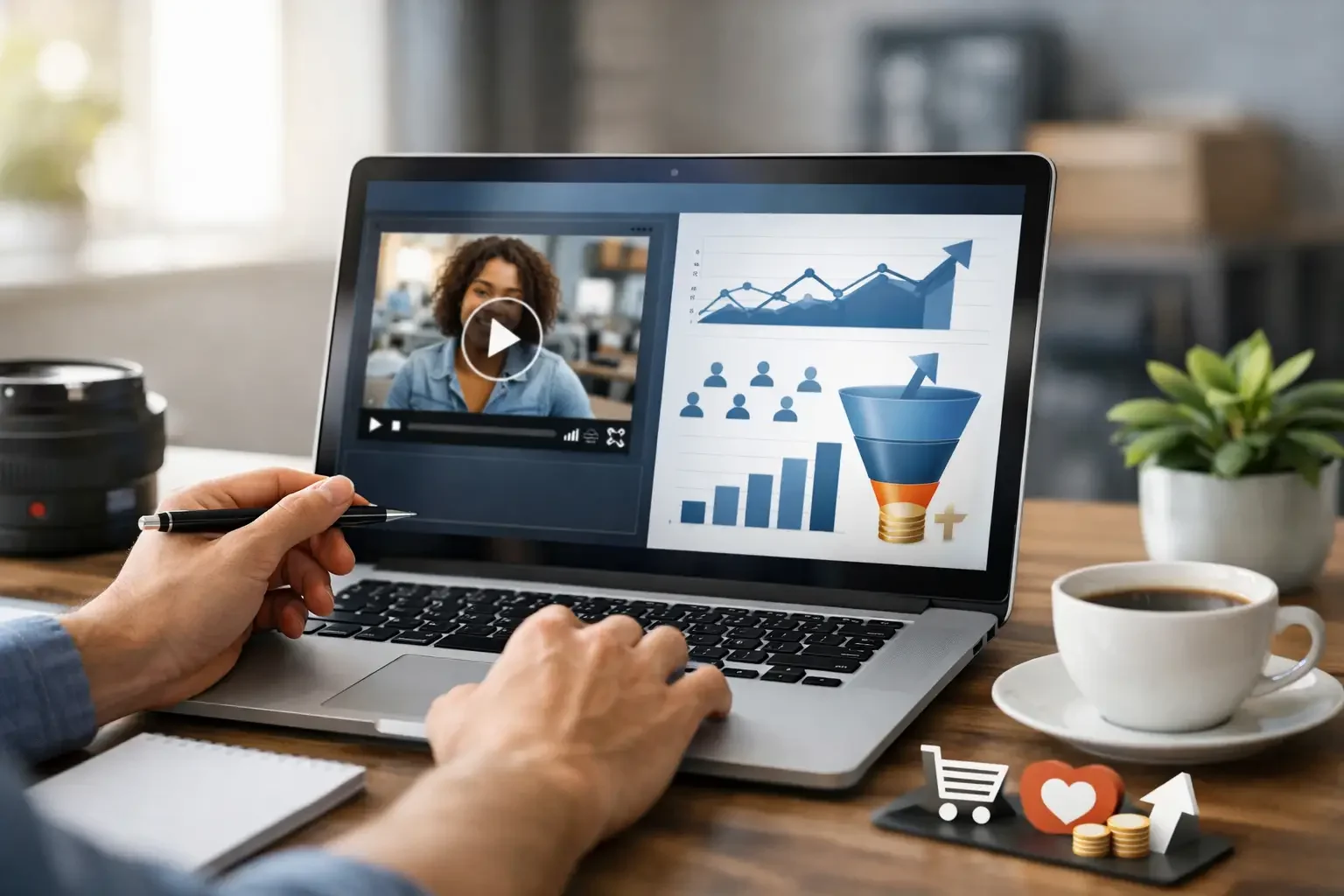
7 Website Video Conversion Benefits

A visitor lands on your site, scans for a few seconds, and makes a decision before reading half the page. That is exactly why website video conversion benefits matter. A strong video can do in 30 seconds what blocks of text, stock photos, and generic headlines often fail to do - create clarity, confidence, and momentum.

For businesses trying to generate leads, win trust, and stand out in a crowded market, video is not just a nice visual upgrade. It is a practical sales tool. When it is planned well and placed intentionally, video helps your website work harder without making your message feel pushy.

Why website video conversion benefits are so noticeable

Most websites ask visitors to do something important very quickly. Contact your team. Request a quote. Schedule a consultation. Donate. Apply. Book. Buy. The challenge is that people hesitate when they do not yet trust the company, understand the offer, or feel confident about the next step.

Video closes those gaps faster than static content alone. It combines voice, visuals, pacing, and emotion in a way that makes your business feel real. That matters because conversion is rarely just about information. It is about reducing doubt.

A well-produced video can show your team, your process, your environment, your product in action, or the result you create for clients. That kind of visual proof gives visitors a reason to stay engaged long enough to act.

1. Video builds trust faster

Trust is one of the biggest barriers to conversion, especially for service-based businesses. If a prospect is considering a significant purchase or a long-term partnership, they want reassurance that your company is credible, capable, and professional.

Video helps people make that judgment quickly. They can see how you present yourself, hear confidence in your messaging, and get a sense of whether your brand feels polished and dependable. This is especially valuable for industries where relationships matter, such as healthcare, legal, financial, construction, professional services, and nonprofit organizations.

There is a trade-off, though. Poor video can hurt trust just as easily as good video can build it. Weak lighting, unclear audio, generic messaging, or an overly scripted delivery can make a company look less capable, not more. Quality and strategy matter.

2. It explains complex value in less time

Many businesses offer services that are not instantly obvious from a headline. Maybe your work solves a technical problem, involves a multi-step process, or delivers value that is easier to show than describe.

That is where video earns its place. A short homepage brand video, service overview, or process video can simplify your message and help visitors understand what you do without forcing them to read through dense copy. When people understand the offer faster, they are more likely to take the next step.

This is one of the most practical website video conversion benefits for companies with layered or high-consideration services. A clear video can shorten the gap between interest and understanding, which often shortens the path to inquiry as well.

3. Video keeps visitors engaged longer

Attention is limited. If your site does not give people a reason to stay, they leave and keep looking.

Video can increase time on page because it gives visitors an easier way to consume information. Instead of asking them to read every line, it creates a guided experience. That does not mean video should replace strong web copy. It works best when it supports the page, reinforces key messages, and gives people another way to connect with your brand.

Longer engagement does not automatically mean higher conversion, but it often improves the odds. If someone spends more time with your message, they have more opportunity to understand your value and feel comfortable reaching out.

Placement matters here. A homepage video may help with first impressions, while a testimonial video on a service page may be more effective for someone who is already closer to making a decision.

4. It adds emotional clarity to your brand

A website can tell visitors what you do. Video can show them what it feels like to work with you.

That emotional clarity is often the difference between a company that looks fine and one that feels like the right fit. Tone, pace, music, visuals, facial expressions, and voice all shape perception. They communicate professionalism, warmth, confidence, precision, energy, or stability without needing to state those qualities outright.

For organizations that depend on reputation, this matters a great deal. The right video can present your team as approachable and capable at the same time. It can make your company feel established without feeling stiff.

This is especially helpful when your audience is comparing several providers with similar services and pricing. In those cases, people often make decisions based on who seems most trustworthy, most prepared, and easiest to work with.

5. Social proof becomes more convincing on video

Written testimonials are useful, but video testimonials tend to feel more believable because they are harder to fake and easier to connect with. A real client describing a result in their own words gives prospects something concrete to respond to.

That is one of the strongest website video conversion benefits for businesses that rely on referrals, case studies, or reputation-based marketing. Instead of simply claiming you deliver results, you let satisfied clients say it for you.

The best testimonial videos do not just praise the company. They describe the problem, explain what it was like to work together, and point to a specific outcome. That creates a story prospects can see themselves in.

Not every brand needs testimonial videos on every page. But in industries where credibility drives decisions, they can be one of the most persuasive assets on the site.

6. Video can improve lead quality, not just lead volume

More conversions are good. Better conversions are better.

One of the overlooked advantages of video is that it helps pre-qualify your audience. When your site includes a strong brand video, service explanation, or founder message, prospects get a clearer understanding of your approach before they contact you. That means the inquiries you receive may be more aligned with your process, pricing, and expectations.

For growing businesses, this can save time and improve sales conversations. Instead of fielding a high volume of low-fit leads, you may hear from people who already understand your value and are further along in their decision-making.

This is where strategic messaging makes a real difference. A video should not try to appeal to everyone. It should help the right people recognize that your business is the right match.

7. It strengthens conversion across the full website

The biggest gains often come when video is treated as part of a broader conversion strategy, not a standalone asset. A homepage video can create a stronger first impression. A service-page video can explain what sets your offer apart. A testimonial video can reduce hesitation. A recruitment video can support hiring. A culture video can strengthen brand perception.

In other words, video is versatile. Different formats support different decision points.

How to use website video conversion benefits wisely

Not every page needs video, and not every business needs the same type. The right approach depends on your audience, sales cycle, and the questions prospects ask before they convert.

If your visitors need quick reassurance, a short homepage video may be enough. If they need education, a service explainer may do more work. If they need proof, client stories may carry the most weight. The best strategy usually starts with one question: what is stopping qualified visitors from taking action now?

Answer that well, and the role of video becomes much clearer.

It is also worth being realistic. Video alone will not fix weak positioning, confusing offers, poor web design, or a clunky contact process. It performs best when the rest of the site is already set up to convert. Think of it as an amplifier. It strengthens a strong message. It does not replace one.

For businesses in competitive markets, that amplification can be significant. A polished video presence signals that you take your brand seriously. It tells prospects they can expect professionalism before they ever speak to your team. That first impression carries weight.

For many companies, the best results come from working with a production partner who understands both craftsmanship and marketing. Chisum Multimedia approaches video with that balance in mind - creating polished visual assets that are built to support real business goals, not just fill space on a page.

The most effective websites do more than look good. They help people feel informed, confident, and ready to act. Video is one of the clearest ways to make that happen, especially when every second of attention counts.

Richard Chisum
How to Film Client Testimonials That Convert

A weak testimonial video usually has the same problem: the client says nice things, but nothing anyone can actually use. It sounds generic, looks rushed, and leaves the viewer without a clear reason to trust the business. If you want to know how to film client testimonials that make an impact, the goal is not just to capture praise. It is to capture proof.

At Chisum Multimedia, we've found that testimonial videos work best when they show a real problem, a real experience, and a real outcome. That is what makes them persuasive. A polished production matters, but strategy matters more... and first.

How to film client testimonials with a clear purpose

Before a camera comes out, decide what the testimonial needs to do. Some testimonials are meant to build broad brand trust. Others are designed to support a specific service, help sales conversations, strengthen recruiting, or improve conversion on a landing page. The right approach depends on where the video will be used.

If the testimonial is going on your homepage, you may want a broad story about trust, service, and overall results. If it is tied to a specific campaign, the interview should focus more tightly on the challenge the client faced and why your solution stood out. A testimonial that tries to say everything usually ends up saying very little.

This is where many businesses lose effectiveness. They ask for kind words instead of useful details. A better testimonial gives viewers context. What was the problem? What made the decision difficult? What changed after working together? Those answers create credibility because they sound earned.

Choose the right client before you film

Not every happy customer will be a strong testimonial on camera. The best choice is someone who is clearly satisfied, comfortable enough to speak in full thoughts, and able to talk about results with specificity. You do not need a polished performer. In fact, too polished can feel rehearsed. You need someone genuine, clear, and relatable to the audience you want to reach.

It also helps to choose a client whose story reflects the kind of business you want more of. If you are targeting healthcare, professional services, manufacturing, or nonprofit leadership in Middle Tennessee, the testimonial should feel relevant to those viewers. Strong alignment makes the video work harder as a marketing asset.

Give the client confidence before the shoot. Let them know this is a guided conversation, not a memorized speech. Most people are more relaxed when they know they will not be expected to get it perfect in one take.

Prep the story, not a script

One of the most common mistakes in learning how to film client testimonials is over-scripting. The moment someone starts reading prepared language, the value drops. Viewers can feel when a line was written to sound impressive rather than spoken from experience.

Instead of writing a script, build a story path. Send a few questions ahead of time so the client can think, but keep them broad enough to invite natural answers. Ask what problem they were facing, why they chose your company, what the experience was like, and what changed as a result. Then prepare follow-up questions that pull out specifics.

Specifics are where the strongest lines live. A client saying, "They were great to work with," is fine. A client saying, "They made a complicated project easy, kept communication clear, and helped us launch on time," is far more persuasive. The second statement gives a future customer something they can picture.

Set up the interview to feel relaxed and look polished

A testimonial should feel human, but it should not feel casual in a careless way. Visual quality affects trust. If the lighting is harsh, the audio echoes, or the framing feels off, the viewer may question the professionalism of the business itself.

Choose a quiet location with depth and a clean background that supports the brand. That could be an office, clinic, workspace, or environment connected to the client story. Avoid anything too busy or distracting. The setting should add credibility without pulling attention away from the speaker.

Good lighting matters more than expensive gear. Soft, directional light is flattering and professional. Audio matters even more. If viewers struggle to hear clearly, they will stop watching. A strong microphone setup is not optional for testimonial work.

Framing should be intentional. In most cases, the client should look slightly off camera toward the interviewer. That creates a more natural conversation than having them stare into the lens. Keep the shot steady, compose it cleanly, and give enough room in the frame to feel comfortable rather than cramped.

Direct the conversation without taking it over

The interviewer has a bigger role than most businesses realize. Great testimonial footage usually comes from great listening. If you interrupt too quickly, rush to the next question, or stick too rigidly to a list, you miss the moments that feel real.

Start with easier questions to build comfort. Let the client talk about their role, their organization, or the situation they were facing. Once they settle in, move into the decision process, the experience of working together, and the results. When they say something promising, ask them to go deeper. If they mention communication was excellent, ask what that looked like. If they mention a challenge, ask what was at stake.

It often helps to ask the client to restate the answer as a full sentence. For example, if they answer, "About six months," ask them to say, "We worked with them for six months." That gives you a cleaner soundbite in the edit.

The tone on set matters too. People give stronger answers when they feel supported, not judged. A calm, professional interview process almost always leads to better footage.

Capture more than the interview

If you want the final video to feel polished and engaging, do not stop at the talking-head interview. Capture supporting footage that shows the client, their team, their environment, and any relevant interaction with your product or service. This footage gives the editor flexibility and helps the story feel grounded in reality.

B-roll also solves practical problems. It covers cuts, trims hesitation, and adds visual rhythm. More importantly, it lets the audience see what the client is describing. If they talk about a welcoming office, efficient process, or improved operation, show it. The combination of spoken experience and visual evidence creates much stronger trust than either one alone.

This is especially valuable for businesses using testimonial videos across multiple channels. A well-shot testimonial session can often produce a longer feature, shorter social cutdowns, website clips, and campaign-specific edits.

Edit for credibility, not hype

The strongest testimonial videos do not feel overproduced. Yes, they should look refined and professionally finished. But if the music swells too hard, the cuts feel too fast, or every line sounds like a sales slogan, the video can lose credibility.

A better edit builds momentum through clarity. Open with a strong line that identifies the problem or the result. Then shape the story so the viewer understands the before, the decision, the experience, and the outcome. Keep the pacing tight, but let meaningful moments breathe.

It is also worth resisting the urge to stuff every good quote into one video. Shorter is often better if every line is doing useful work. The right length depends on where the video will be used. A homepage testimonial may need to be concise. A sales presentation or proposal support piece may earn more depth. It depends on the audience and the context.

Graphics and branding should support the message, not dominate it. Clean lower thirds, a simple logo treatment, and a consistent visual style usually do more for professionalism than aggressive motion design.

What makes a testimonial actually convert

If you are focused on how to film client testimonials that help drive inquiries, trust is the deciding factor. Viewers are not just looking for praise. They are looking for signs that your business is competent, responsive, and worth the investment.

That means the best testimonial includes a recognizable challenge, a believable reason for choosing you, and a specific outcome or benefit. Sometimes that benefit is measurable growth. Sometimes it is peace of mind, smoother communication, or confidence that the job will be handled right. Those softer outcomes still matter, especially in service-based industries where the client experience is part of the value.

A testimonial should also sound like the client, not like your marketing department. Natural language wins. Honest emotion wins. Precision wins.

For businesses that want testimonial videos to do more than fill space on a website, professional production and strategic interviewing make a real difference. That is where an experienced partner can simplify the process and raise the quality at the same time. At Chisum Multimedia, that balance of craftsmanship and clarity is what turns a client conversation into a marketing tool.

The best testimonial videos do not beg for attention. They earn trust by showing what it is actually like to work with you, and that is what makes people take the next step.

Richard Chisum