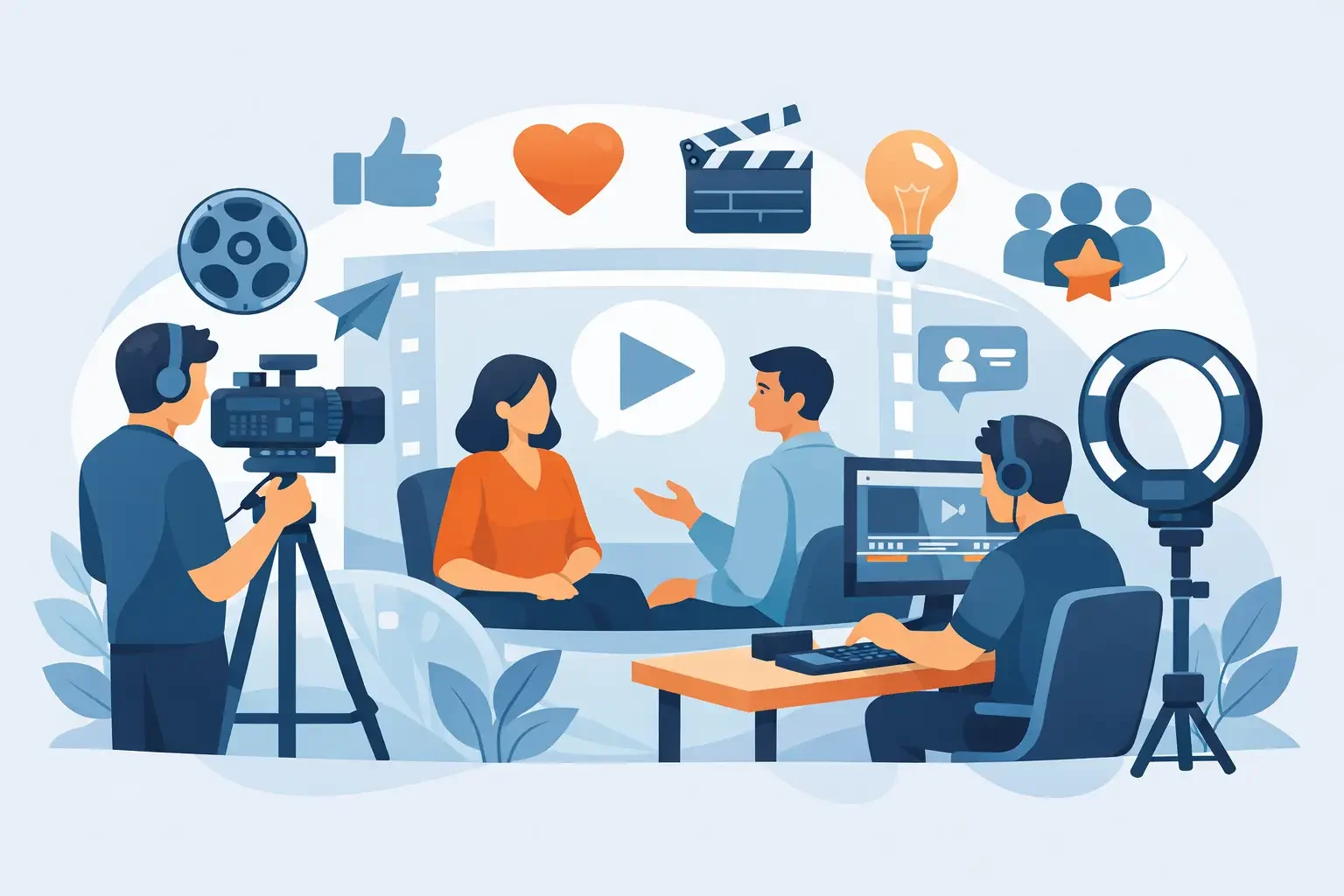
The Power of a Well Done Testimonial Video

A great customer quote on your website can help. A well-made client video can do far more.

That difference matters when a prospect is comparing options, weighing risk, or trying to decide whether your business feels credible enough to contact. A testimonial video production service takes the most persuasive part of your marketing - real customer experience - and shapes it into content people actually believe. For companies in competitive markets, that can be the piece that moves someone from interest to action.

Testimonial videos work because they reduce doubt. Instead of hearing a company describe its own strengths, viewers hear a client explain the problem they faced, why they chose a partner, and what changed after the work was done. At Chisum Multimedia, we produce testimonials that feel less like advertising and more like evidence.

Why testimonial videos outperform written praise

Most businesses already have positive reviews, emails from happy clients, or kind words gathered after a successful project. Those are useful assets, but they have limits. Written testimonials are easy to skim past. They can also feel interchangeable if they are too polished or too short.

Video adds context that text cannot. Viewers can see confidence, hear tone of voice, and pick up on the details that make a story feel genuine. A healthcare provider describing patient trust, a contractor talking about communication, or a nonprofit partner sharing program impact carries more weight on camera because the message has texture. It feels lived, not manufactured.

That said, not every testimonial video automatically works. If it is overly scripted, poorly lit, rushed, or vague, it can lose the authenticity that makes this format valuable. The production quality needs to support the message without overpowering it. That balance is where a professional team makes a real difference.

What a testimonial video production service should actually include

A strong testimonial video production service is not just someone showing up with a camera. The real value starts before the shoot and continues well after it.

The first step is strategy. Not every happy client is the right fit to feature. The best testimonial subjects are articulate, credible, and aligned with the audience you want to reach. A production partner should help identify whose story will resonate most and what angle matters most to prospects. Sometimes that angle is results. Sometimes it is responsiveness, trust, speed, or the ease of working together. It depends on what your buyers need to hear before they say yes.

Pre-production also matters more than many companies expect. Good interviews are not accidents. They come from thoughtful planning, clear messaging goals, and questions designed to bring out honest, specific answers. The goal is not to feed someone a script. The goal is to create an environment where the right story can come out naturally.

Then there is production itself. Lighting, sound, camera framing, pacing, and interview direction all shape how your brand is perceived. A client may say the right things, but if the audio is weak or the visual presentation feels amateur, the credibility of the message suffers. Professional production protects the integrity of the story.

Post-production is where the piece becomes usable marketing content. Editing should tighten the story, remove distractions, and keep the focus on the customer experience. Often, the strongest final version is shorter than the full interview and more selective in what it includes. A testimonial does not need to say everything. It needs to say the right things clearly.

The difference between recording a client and telling a story

This is where many businesses misjudge the format. They assume a testimonial video is just a recorded endorsement. In reality, the best ones follow a simple narrative arc.

The viewer needs to understand what the client was dealing with before your company entered the picture. Then they need to hear why that client chose your business, what the experience was like, and what outcome followed. That progression creates momentum. It gives the audience something they can see themselves in.

Without that structure, testimonial videos often become generic praise. Statements like "they were great to work with" or "we highly recommend them" are positive, but they are not persuasive enough on their own. Specificity is what builds trust. A stronger version sounds more like this: we had a problem, we needed a partner we could trust, the process was easier than expected, and we saw measurable improvement.

That is one reason businesses benefit from working with a partner who understands both storytelling and marketing. You are not just collecting compliments. You are creating a sales asset.

Where testimonial video content fits in your marketing

One of the best things about this format is how flexible it is. A testimonial video can live on a homepage, a service page, a landing page, a social campaign, a proposal follow-up, or a presentation to stakeholders. It can support brand awareness at the top of the funnel or help close decisions later in the process.

Different placements call for different edits. A longer version might work well on a website where a prospect is actively researching your business. A shorter cut may be better for social media or ad campaigns. A production team with a business mindset will think beyond a single deliverable and help you get more value from the shoot.

This is especially useful for organizations with multiple audiences. A healthcare practice may want one testimonial focused on patient confidence and another on operational professionalism. A B2B company may need separate stories for different industries or buyer concerns. One filming day can often support several strategic uses if the planning is done well.

How to choose the right testimonial video production service

The right fit is not always the cheapest quote or the team with the most gear. What matters more is whether they understand how to make clients comfortable, shape a believable story, and produce content that reflects your brand at a high level.

Look for a company that asks smart questions early. They should want to know who your audience is, how the video will be used, what concerns your prospects typically have, and what success looks like. If the conversation stays centered only on cameras, shoot length, or editing software, that is a sign the strategy may be too thin.

You should also pay attention to their process. A good production experience should feel organized, responsive, and easy to navigate. Your team and your clients should not feel like they are being pulled into unnecessary complexity. Strong creative work and strong service usually go together.

Past work matters too, but not just in the obvious sense. You are not only looking for attractive visuals. You are looking for clarity, authenticity, and emotional credibility. Do the people on camera seem comfortable? Does the story feel honest? Does the final edit feel like a real business asset rather than a nice-looking video with no purpose behind it?

For businesses across Middle Tennessee, that combination of quality and ease is often what separates an average vendor from a valuable long-term partner. Chisum Multimedia is built around that idea - high-impact video work paired with a smooth, professional client experience.

Common mistakes that weaken testimonial videos

A few predictable issues can limit results.

The first is choosing the wrong person to feature. The happiest client is not always the best speaker, and the biggest name is not always the most relatable. The strongest testimonial is the one your future customer believes.

The second is trying to control every word. People sound less convincing when they are trying to recite a brand-approved line. Guidance is helpful. Over-scripting is not.

The third is keeping the story too broad. If the testimonial never names a challenge, a decision point, or a result, it becomes forgettable. Viewers respond to stories with clear stakes.

The fourth is treating the video as a one-time project instead of part of a larger marketing system. If you invest in strong testimonial content, it should be used intentionally across your sales and marketing efforts.

When this service is worth the investment

Not every business needs testimonial video content immediately. If you are still defining your offer, have no satisfied clients yet, or lack the basic channels to use the video effectively, it may be better to solve those issues first.

But if your business already delivers strong results and relies on trust to win new opportunities, this type of content can be one of the most practical investments you make. That is especially true in service industries, healthcare, professional services, education, and organizations where reputation directly affects growth.

The strongest marketing often answers objections before a sales conversation even starts. A well-produced client story does exactly that. It shows proof, lowers hesitation, and gives your audience a reason to feel more confident about taking the next step.

If your business has earned trust, it is worth presenting that trust well. The right testimonial video does not just say you do good work. It helps people see what it is like to work with you before they ever reach out.
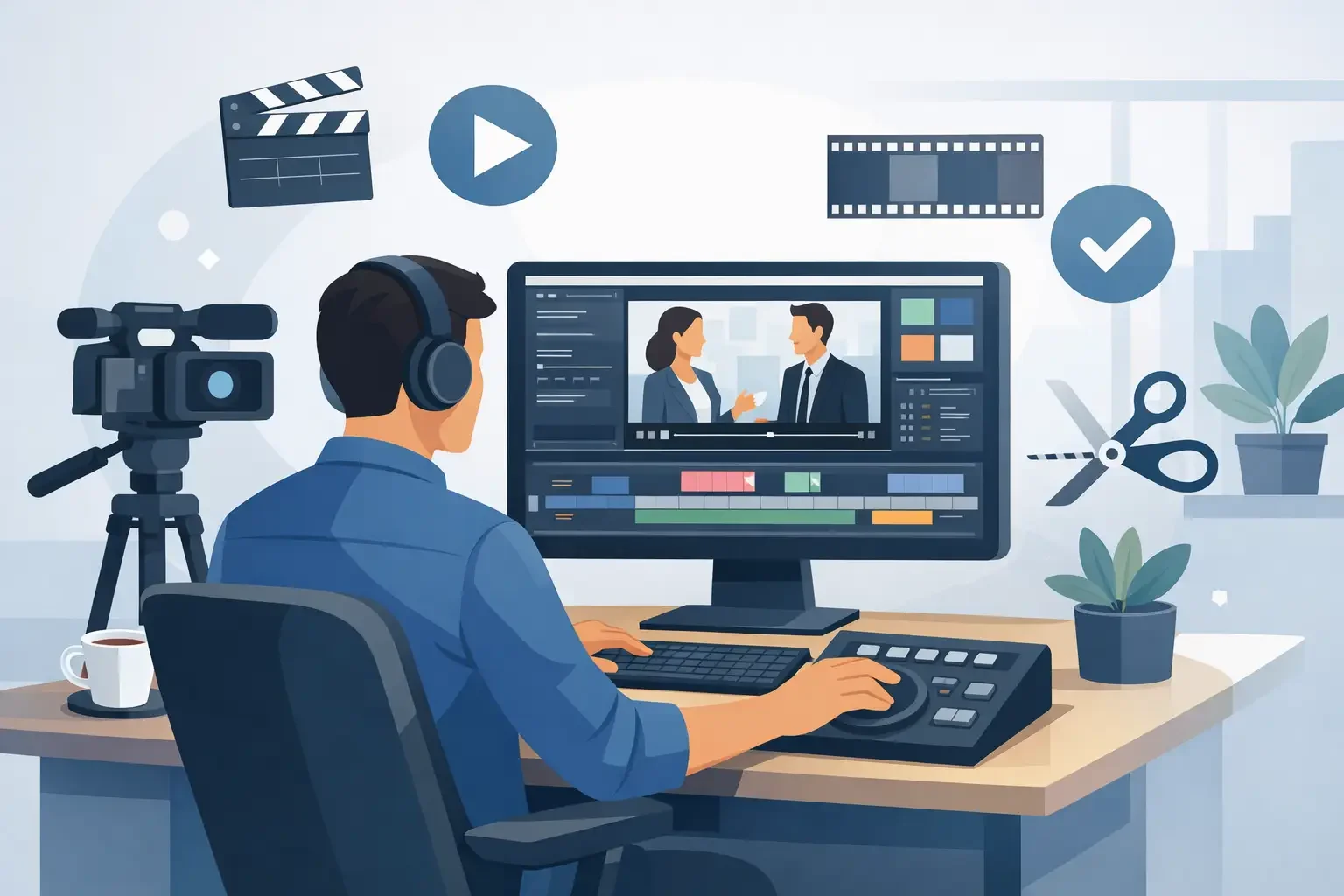
Richard Chisum
What Is a Corporate Video Editor?

A great shoot can still fall flat in the edit.

That is the part many businesses do not see coming. They invest in planning, talent, lighting, interviews, and b-roll, then assume the hard part is over once filming wraps. In reality, if you are asking what is a corporate video editor, you are really asking who turns raw footage into a business asset that is clear, polished, and built to perform.

At Chisum Multimedia, we creatively edit video content specifically for a business purpose. That purpose might be marketing, recruiting, training, internal communication, investor messaging, event promotion, or brand storytelling. It's much more conplicated than just trimming clips together. A great edit defines pacing, clarity, emotion, credibility, and whether the final piece actually supports the goal behind the project.

What Is a Corporate Video Editor Responsible For?

At a basic level, a corporate video editor takes footage, audio, graphics, music, and brand elements and turns them into a finished video. But in a business setting, the role goes further than technical assembly.

A strong corporate editor is always making decisions through a strategic lens. They are asking whether the first few seconds hold attention, whether the message is easy to follow, whether the tone fits the brand, and whether the video feels trustworthy enough to represent the company well. For a healthcare group, that may mean clean, reassuring pacing and careful interview editing. For a growing company in Nashville or Murfreesboro, it may mean a sharper, more energetic cut built for ads, a homepage, or social campaigns.

Editors also handle the details that most viewers never consciously notice but always feel. They smooth transitions, improve audio, balance color, add text and motion graphics, tighten interviews, remove distractions, and make sure the final piece feels cohesive. If the video looks polished and easy to watch, the editor has done a lot of invisible work.

The Difference Between Editing and Simply Cutting Clips

Not every person who uses editing software is a corporate video editor.

A true corporate editor understands business communication. They know that a brand video is not the same as a wedding highlight reel or a cinematic short film. The goal is not just to make something beautiful. It is to make something effective.

That means the editor has to understand audience, message, and context. A recruiting video should make the culture feel real. A testimonial should build trust without sounding scripted. A product or service explainer should reduce confusion quickly. An internal communication video should feel clear and respectful of people’s time.

This is where experience matters. Corporate editing often involves balancing brand polish with authenticity. If it is too loose, the company can look unprofessional. If it is too perfect, it can feel staged. The right editor knows how to find the middle ground.

What a Corporate Video Editor Actually Works On

Corporate video editing covers a wide range of content types. One editor might work on a 30-second ad one day and a five-minute brand story the next. They may support videos for websites, social media, presentations, email campaigns, trade shows, onboarding, fundraising, or internal teams.

In practical terms, their work often includes organizing footage, selecting the strongest takes, editing interviews, layering b-roll over key messaging, cleaning up sound, correcting color, adding logos and titles, and exporting versions for different platforms. They may also work closely with a producer, creative director, or client team to make sure the final version aligns with campaign goals.

Sometimes the job is straightforward. Sometimes it involves solving problems. Maybe the best answer in an interview came late in the conversation and has to be restructured. Maybe the footage is strong, but the story is not yet clear. Maybe a leadership team wants a video to feel more premium, more human, or more concise. A skilled editor helps bridge that gap.

Why Editing Matters So Much in Corporate Video

Production quality gets attention, but editing is what gives a business video its shape.

Good editing helps viewers understand what matters quickly. It keeps momentum moving. It removes repetition. It gives a video the right tone for the brand. Most of all, it protects attention, which is one of the hardest things to earn in marketing.

This matters because business video usually has a job to do. It may need to explain a service, support a sales conversation, improve website engagement, increase ad performance, or strengthen credibility with potential clients. If the pacing is off, the messaging wanders, or the visuals do not reinforce the story, the video may still look fine while underperforming in practice.

That is why editing should never be treated as a final technical step. It is where strategy and storytelling meet.

What Is a Corporate Video Editor Looking For in the Footage?

When reviewing raw material, a corporate video editor is not just looking for the cleanest shot. They are looking for the strongest communication.

In interviews, that means identifying moments that sound genuine, concise, and aligned with the message. In b-roll, it means choosing visuals that support the narrative instead of filling space. In branded content, it means selecting details that reflect the company accurately, from office environment to team interactions to product use.

Editors also look for rhythm. Not every scene should move at the same speed. Some messages need room to breathe. Others need to land quickly. A thoughtful edit creates variation so the viewer stays engaged without feeling rushed or overwhelmed.

This is one reason businesses benefit from working with a production partner instead of treating editing like a commodity. The footage may be the raw material, but interpretation is what turns it into communication.

The Skills That Set a Corporate Video Editor Apart

Technical skill is expected. A professional editor should know how to work efficiently with industry-standard software, audio cleanup, color correction, graphics, and formatting.

But the strongest corporate editors bring more than software knowledge. They understand branding. They recognize how people process information. They know how to build trust visually and how to support a call to action without making the content feel forced.

They also communicate well. In business video, revisions are normal. Stakeholders may have different priorities, and an editor has to navigate that feedback without losing the core purpose of the piece. That requires judgment, patience, and the ability to translate vague requests like make it pop or make it more polished into practical editing decisions.

Speed matters too, but speed without judgment is expensive. A fast edit that misses the brand or the audience can create more revision cycles, more internal confusion, and less return on the project.

When Businesses Need a Corporate Video Editor

If a video represents your company publicly or supports a meaningful business goal, professional editing is usually worth it.

That includes brand videos, service explainers, testimonial videos, recruiting content, training materials, leadership messaging, event recaps, and paid ad creative. In each of these cases, the video is doing more than filling a content calendar. It is shaping perception.

There are times when a simple in-house edit makes sense, especially for quick updates or informal social content. But for cornerstone pieces, the trade-off is usually quality, consistency, and strategic clarity. A business may save money upfront by taking a shortcut, then lose impact because the video does not hold attention or reflect the brand well.

For many organizations, the better move is to work with a team that handles both production and post-production under one roof. That creates stronger alignment from the start, because the people planning the story also understand how it will come together in the edit. At Chisum Multimedia, that is part of what makes the process easier for clients. The strategy, filming, and editing all work toward the same result.

How to Know If the Editing Is Working

The best editing often feels natural. Viewers stay engaged, the message feels clear, and the video leaves the right impression without drawing attention to the mechanics.

You can usually tell the editing is working when the video sounds like your brand, looks consistent with your standards, and makes people understand or feel what you intended. Sometimes that leads to stronger watch time, better conversion, or more confident sales conversations. Sometimes the value is less direct but just as important, like credibility, clarity, or trust.

A polished edit alone will not fix weak strategy. But when the message is solid, editing is often the difference between a video that sits on a server and one that becomes a real marketing tool.

If you are wondering whether your business needs a corporate video editor, a simple test helps. Ask whether the video needs to do something specific for your company. If the answer is yes, the edit deserves as much attention as the shoot itself. That is where raw footage becomes a message people actually remember.

Richard Chisum