
What Is a Corporate Video Editor?

A great shoot can still fall flat in the edit.

That is the part many businesses do not see coming. They invest in planning, talent, lighting, interviews, and b-roll, then assume the hard part is over once filming wraps. In reality, if you are asking what is a corporate video editor, you are really asking who turns raw footage into a business asset that is clear, polished, and built to perform.

At Chisum Multimedia, we creatively edit video content specifically for a business purpose. That purpose might be marketing, recruiting, training, internal communication, investor messaging, event promotion, or brand storytelling. It's much more conplicated than just trimming clips together. A great edit defines pacing, clarity, emotion, credibility, and whether the final piece actually supports the goal behind the project.

What Is a Corporate Video Editor Responsible For?

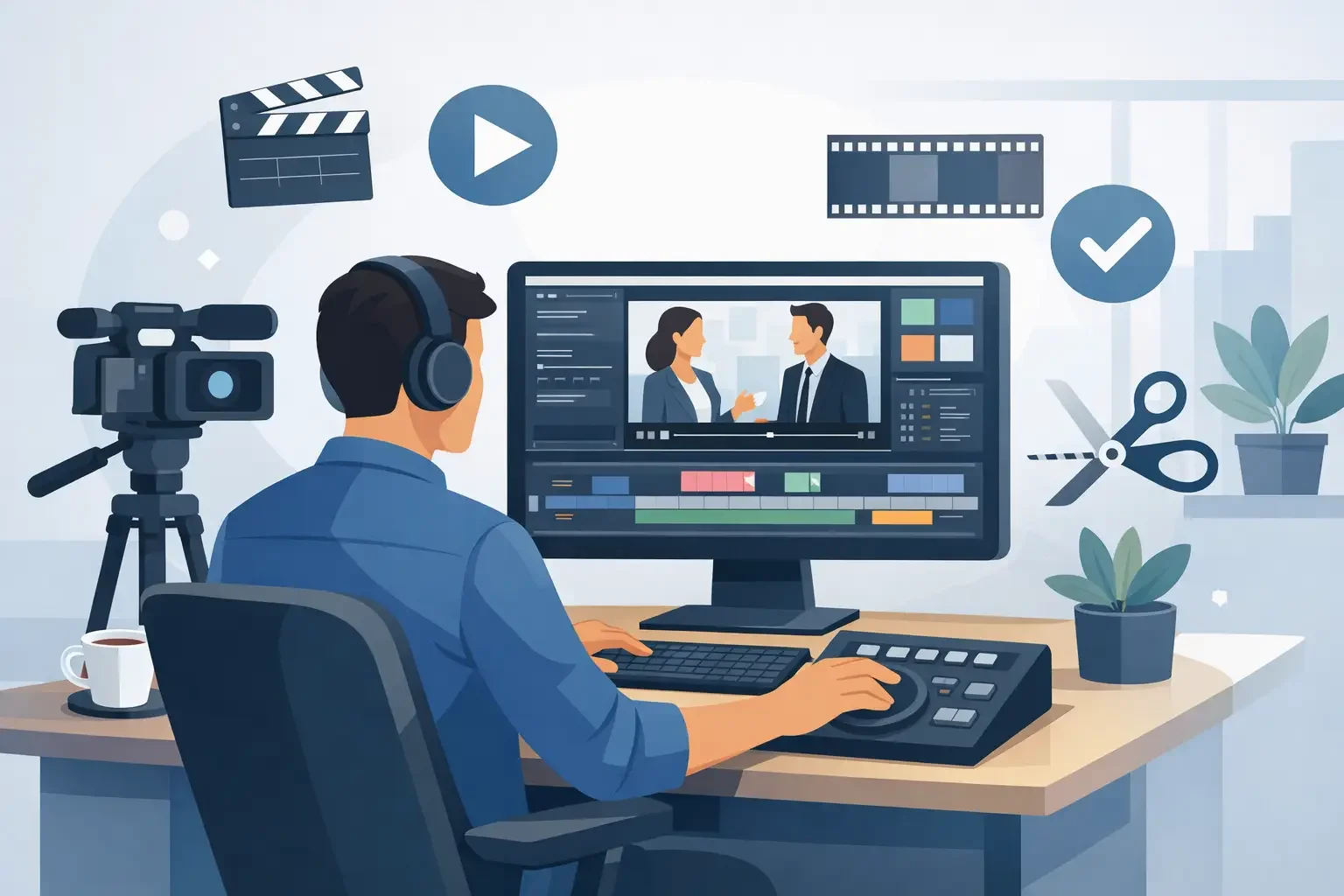
At a basic level, a corporate video editor takes footage, audio, graphics, music, and brand elements and turns them into a finished video. But in a business setting, the role goes further than technical assembly.

A strong corporate editor is always making decisions through a strategic lens. They are asking whether the first few seconds hold attention, whether the message is easy to follow, whether the tone fits the brand, and whether the video feels trustworthy enough to represent the company well. For a healthcare group, that may mean clean, reassuring pacing and careful interview editing. For a growing company in Nashville or Murfreesboro, it may mean a sharper, more energetic cut built for ads, a homepage, or social campaigns.

Editors also handle the details that most viewers never consciously notice but always feel. They smooth transitions, improve audio, balance color, add text and motion graphics, tighten interviews, remove distractions, and make sure the final piece feels cohesive. If the video looks polished and easy to watch, the editor has done a lot of invisible work.

The Difference Between Editing and Simply Cutting Clips

Not every person who uses editing software is a corporate video editor.

A true corporate editor understands business communication. They know that a brand video is not the same as a wedding highlight reel or a cinematic short film. The goal is not just to make something beautiful. It is to make something effective.

That means the editor has to understand audience, message, and context. A recruiting video should make the culture feel real. A testimonial should build trust without sounding scripted. A product or service explainer should reduce confusion quickly. An internal communication video should feel clear and respectful of people’s time.

This is where experience matters. Corporate editing often involves balancing brand polish with authenticity. If it is too loose, the company can look unprofessional. If it is too perfect, it can feel staged. The right editor knows how to find the middle ground.

What a Corporate Video Editor Actually Works On

Corporate video editing covers a wide range of content types. One editor might work on a 30-second ad one day and a five-minute brand story the next. They may support videos for websites, social media, presentations, email campaigns, trade shows, onboarding, fundraising, or internal teams.

In practical terms, their work often includes organizing footage, selecting the strongest takes, editing interviews, layering b-roll over key messaging, cleaning up sound, correcting color, adding logos and titles, and exporting versions for different platforms. They may also work closely with a producer, creative director, or client team to make sure the final version aligns with campaign goals.

Sometimes the job is straightforward. Sometimes it involves solving problems. Maybe the best answer in an interview came late in the conversation and has to be restructured. Maybe the footage is strong, but the story is not yet clear. Maybe a leadership team wants a video to feel more premium, more human, or more concise. A skilled editor helps bridge that gap.

Why Editing Matters So Much in Corporate Video

Production quality gets attention, but editing is what gives a business video its shape.

Good editing helps viewers understand what matters quickly. It keeps momentum moving. It removes repetition. It gives a video the right tone for the brand. Most of all, it protects attention, which is one of the hardest things to earn in marketing.

This matters because business video usually has a job to do. It may need to explain a service, support a sales conversation, improve website engagement, increase ad performance, or strengthen credibility with potential clients. If the pacing is off, the messaging wanders, or the visuals do not reinforce the story, the video may still look fine while underperforming in practice.

That is why editing should never be treated as a final technical step. It is where strategy and storytelling meet.

What Is a Corporate Video Editor Looking For in the Footage?

When reviewing raw material, a corporate video editor is not just looking for the cleanest shot. They are looking for the strongest communication.

In interviews, that means identifying moments that sound genuine, concise, and aligned with the message. In b-roll, it means choosing visuals that support the narrative instead of filling space. In branded content, it means selecting details that reflect the company accurately, from office environment to team interactions to product use.

Editors also look for rhythm. Not every scene should move at the same speed. Some messages need room to breathe. Others need to land quickly. A thoughtful edit creates variation so the viewer stays engaged without feeling rushed or overwhelmed.

This is one reason businesses benefit from working with a production partner instead of treating editing like a commodity. The footage may be the raw material, but interpretation is what turns it into communication.

The Skills That Set a Corporate Video Editor Apart

Technical skill is expected. A professional editor should know how to work efficiently with industry-standard software, audio cleanup, color correction, graphics, and formatting.

But the strongest corporate editors bring more than software knowledge. They understand branding. They recognize how people process information. They know how to build trust visually and how to support a call to action without making the content feel forced.

They also communicate well. In business video, revisions are normal. Stakeholders may have different priorities, and an editor has to navigate that feedback without losing the core purpose of the piece. That requires judgment, patience, and the ability to translate vague requests like make it pop or make it more polished into practical editing decisions.

Speed matters too, but speed without judgment is expensive. A fast edit that misses the brand or the audience can create more revision cycles, more internal confusion, and less return on the project.

When Businesses Need a Corporate Video Editor

If a video represents your company publicly or supports a meaningful business goal, professional editing is usually worth it.

That includes brand videos, service explainers, testimonial videos, recruiting content, training materials, leadership messaging, event recaps, and paid ad creative. In each of these cases, the video is doing more than filling a content calendar. It is shaping perception.

There are times when a simple in-house edit makes sense, especially for quick updates or informal social content. But for cornerstone pieces, the trade-off is usually quality, consistency, and strategic clarity. A business may save money upfront by taking a shortcut, then lose impact because the video does not hold attention or reflect the brand well.

For many organizations, the better move is to work with a team that handles both production and post-production under one roof. That creates stronger alignment from the start, because the people planning the story also understand how it will come together in the edit. At Chisum Multimedia, that is part of what makes the process easier for clients. The strategy, filming, and editing all work toward the same result.

How to Know If the Editing Is Working

The best editing often feels natural. Viewers stay engaged, the message feels clear, and the video leaves the right impression without drawing attention to the mechanics.

You can usually tell the editing is working when the video sounds like your brand, looks consistent with your standards, and makes people understand or feel what you intended. Sometimes that leads to stronger watch time, better conversion, or more confident sales conversations. Sometimes the value is less direct but just as important, like credibility, clarity, or trust.

A polished edit alone will not fix weak strategy. But when the message is solid, editing is often the difference between a video that sits on a server and one that becomes a real marketing tool.

If you are wondering whether your business needs a corporate video editor, a simple test helps. Ask whether the video needs to do something specific for your company. If the answer is yes, the edit deserves as much attention as the shoot itself. That is where raw footage becomes a message people actually remember.

Richard Chisum
Valuable tips for Healthcare Video Production

A patient can tell within seconds whether a healthcare video feels credible. So can a physician, a hospital administrator, or a marketing director trying to protect a hard-earned brand. That is why choosing an experienced production company like Chisum Multimedia is not simply a creative decision. It is a business decision tied to trust, clarity, compliance, and results.

Healthcare organizations operate in a category where the stakes are higher than most industries. You are not just selling a product or promoting a service. You may be explaining a treatment, introducing a provider, recruiting clinical talent, highlighting a patient experience, or helping families make difficult decisions. The video has to look polished, but it also has to feel accurate, respectful, and easy to understand.

What a healthcare video production company should actually deliver

A strong production partner does more than show up with cameras and lights. In healthcare, that kind of bare-minimum approach usually creates more work for your internal team. The right company helps shape the message, plans for approvals, anticipates production challenges, and keeps the process moving without creating friction.

That matters because healthcare video projects often involve more moving parts than a typical corporate shoot. There may be legal review, patient consent, clinician schedules, facility restrictions, brand guidelines, and internal stakeholders with different priorities. A production team that understands how to navigate those realities can save time and reduce risk long before the final edit is delivered.

At the same time, strategy cannot come at the expense of quality. If the visuals feel generic or the interviews lack confidence, the message loses force. The best work in this space combines clear communication with strong visual craftsmanship. It should be professional enough for a hospital system, approachable enough for patients, and purposeful enough to support marketing goals.

Why healthcare video production is different from general corporate video

A general business video can often rely on broad claims and a polished brand voice. Healthcare audiences expect more. They want reassurance, but they also want specificity. They need to believe the people on screen, understand the message quickly, and feel that the organization behind the video is competent and trustworthy.

That creates a different production standard. Interview coaching matters more because providers are experts in medicine, not always on-camera communicators. Location planning matters more because clinical spaces are active, sensitive environments. Script review matters more because a small wording change can affect accuracy, tone, or compliance.

There is also a practical trade-off in healthcare storytelling. The most emotionally compelling idea is not always the one that is easiest to approve internally. Some organizations need highly polished brand videos. Others need short physician profiles, patient education pieces, service line explainers, or recruitment content that can be produced efficiently and updated over time. A good partner helps you choose the format that fits your goals instead of pushing one style for every need.

How to evaluate a healthcare video production company

The first question is not whether the company owns excellent equipment. It is whether they understand the communication job the video needs to do. A beautiful video that fails to clarify, reassure, or motivate action is still a weak marketing asset.

Look closely at how a company approaches pre-production. Do they ask about your audience, your goals, your approvals process, and where the video will be used? Do they help define success before filming starts? That early planning is often the difference between a video that looks good and a video that performs.

You should also pay attention to how they talk about working with people on camera. Healthcare videos often depend on physicians, nurses, administrators, and patients who are not professional presenters. A production team needs the ability to direct gently, create confidence, and capture authentic delivery without making the experience feel stiff or uncomfortable.

Experience in regulated or reputation-sensitive environments is another good sign. Not every healthcare project involves the same level of legal or privacy complexity, but every project benefits from a team that respects process. You want a partner who is organized, responsive, and comfortable coordinating details without losing momentum.

Finally, review their portfolio with a strategic eye. Ask whether the work feels credible, whether the messaging is clear, and whether each piece appears built for a real business purpose. Production quality matters, but relevance matters more.

The most valuable healthcare videos are built around trust

Trust is the center of healthcare marketing, and video can either strengthen it or weaken it. Patients can sense when a message is overly scripted. Referring providers can tell when branding is polished but the substance is thin. Internal teams notice when a production crew makes a busy clinical environment harder instead of easier.

That is why the strongest healthcare videos usually feel both refined and human. They show real people clearly. They avoid inflated claims. They make complex services easier to understand without talking down to the audience. They respect the viewer's time and attention.

For many organizations, testimonial and profile-driven content works especially well because it puts a face to the brand. A physician introduction can reduce anxiety before an appointment. A patient story can help another family feel seen. A recruiting video can show culture more effectively than a written job post ever will. But these formats only work when they are handled with care. Authenticity cannot be forced, and emotion should never feel manipulated.

Healthcare video production company goals should match your marketing goals

One of the most common mistakes in video planning is treating all video as brand awareness content. Sometimes awareness is the goal. Often it is not. A healthcare video production company should help you define what the asset is supposed to accomplish.

If your goal is patient acquisition, the video may need to answer objections, introduce providers, or explain next steps clearly. If your goal is recruitment, the focus may shift to culture, mission, leadership, and day-to-day experience. If your goal is internal communication, clarity and efficiency may matter more than cinematic style.

This is where distribution matters. A homepage brand video, a paid social ad, a waiting room loop, and a physician recruitment piece should not all be produced the same way. Each has a different attention span, context, and audience expectation. Smart production planning accounts for that from the start.

For healthcare organizations in competitive markets like Middle Tennessee, this alignment is especially valuable. A well-produced video can support service line promotion, strengthen local visibility, and elevate how your organization is perceived across digital channels. When executed well, it becomes more than a deliverable. It becomes a durable marketing tool.

A smooth process matters more than many teams realize

Even excellent creative loses value if the production process is difficult. Healthcare leaders and marketing teams are already managing enough. They do not need a video partner who adds confusion, misses details, or requires constant follow-up.

A dependable company makes the experience feel structured and manageable. Expectations are clear. Communication is prompt. Filming days are organized. Feedback rounds are focused. Problems are handled calmly. That kind of professionalism is not a bonus in healthcare work. It is part of the product.

This is one reason many organizations prefer a full-service team rather than piecing together freelancers. With one coordinated partner, strategy, creative direction, production, and post-production stay aligned. The result is not just efficiency. It is consistency in message and execution.

For organizations that want high-quality video without unnecessary complexity, that combination is hard to overstate. In a field where credibility is everything, your production partner should make the process easier while raising the standard of the final work.

What the right partner looks like in practice

The right fit is usually clear after a few conversations. You should feel that the company understands both the marketing side and the human side of healthcare communication. They should be able to speak confidently about outcomes, not just equipment or style.

They should also bring a steady hand to the work. Not every healthcare video needs to be dramatic. Not every message needs a heavy emotional angle. Sometimes the best approach is simple, direct, and highly useful. Other times, a more story-driven piece is the right move. The value is in knowing the difference.

That is the standard serious organizations should expect from a healthcare video production company. Strong strategy. Professional execution. Respect for process. Video that builds trust and supports growth.

If you are planning your next healthcare video, look for a partner who can make the message clearer, the process smoother, and the final result strong enough to represent your organization with confidence.

Richard Chisum