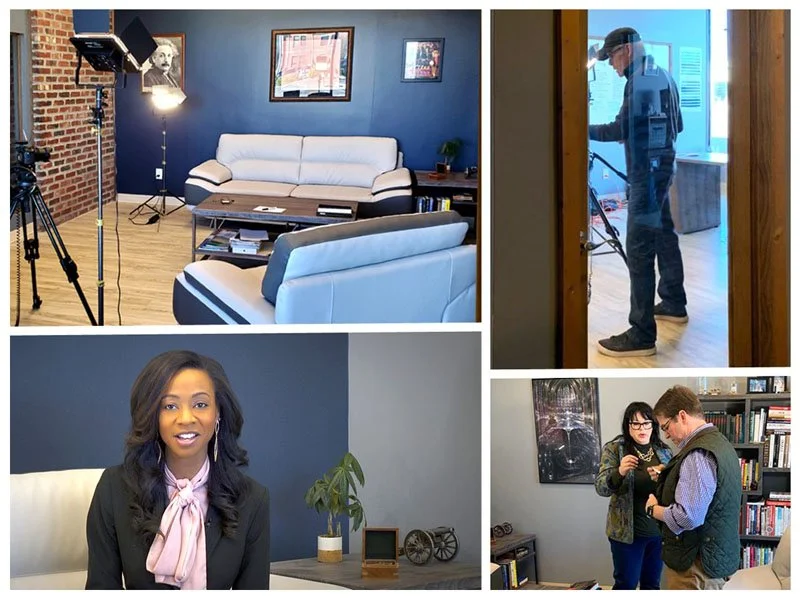
A homepage video that looks polished but says very little is expensive decoration. A recruiting video that feels generic can miss the people you actually want to hire. And a brand story with no strategy behind it may win compliments without moving the business forward. At Chisum Multimedia, we understand that video production for businesses has to do more than look good - it has to support real goals.
For companies across Middle Tennessee, video is no longer a nice extra for the website. It has become one of the clearest ways to establish credibility, explain value, and stay memorable in a crowded market. The businesses getting the strongest return are not simply creating more content. They are creating the right content, with the right message, for the right audience.
What video production for businesses should actually accomplish
Business video is often judged first on visual quality, and that matters. Clean lighting, strong audio, confident editing, and polished brand presentation all shape perception. But if the message is unclear, the audience is wrong, or the video has no practical role in marketing, production quality alone will not carry it very far.
The strongest business videos do three things at once. They make the company look credible. They make the offer easier to understand. And they give the viewer a reason to take the next step. Depending on the organization, that next step might be scheduling a consultation, requesting a quote, supporting a cause, applying for a role, or simply remembering the brand when a need arises.
That is where many companies feel stuck. They know video matters, but they are not always sure what kind of video they need, how long it should be, or what the message should focus on. We work with out clients to answer those questions before a camera ever shows up.
The business case for video
Decision-makers are busy, and audiences are selective. Video helps compress information into a format people are more likely to watch than read in full. It can show a process, communicate emotion, and put real faces behind a brand in a way static content cannot.
For service-based businesses, that matters even more. If you sell expertise, trust is part of the product. Prospective clients want to know who they are hiring, how you think, and whether your company feels established and dependable. We'll help you answer those questions quickly.
For healthcare organizations, nonprofits, professional firms, and growing local companies, video also helps humanize the brand. It gives patients, donors, customers, and stakeholders a clearer picture of the people and mission behind the message. That can make marketing more persuasive without making it feel pushy.
There is a practical side to this as well. One strong video can support your website, social media, presentations, digital ads, email campaigns, and sales conversations. The value is rarely limited to one placement. When planned well, a single production can generate a library of content that keeps working long after the shoot day ends.
Choosing the right type of business video
Not every company needs the same video, and trying to force one piece of content to do everything usually weakens the result. It helps to think in terms of function.
A brand video is often the best fit when the goal is to introduce the company, communicate personality, and build trust. This is the piece that helps people understand who you are and why your business is different.
A testimonial or client story works well when your audience needs reassurance. Seeing a real customer explain the problem, the experience, and the outcome can often say more than a paragraph of marketing copy.
An explainer video is useful when your service, product, or process needs clarification. These videos reduce friction. They answer the questions people have before they are ready to buy.
Recruiting videos serve a different purpose. They help attract the right talent by showing culture, leadership, values, and day-to-day environment. That matters in competitive hiring markets where candidates are evaluating employers just as carefully as employers evaluate them.
Event coverage, training content, social clips, and campaign-focused videos can all be valuable too. The right mix depends on where your business is growing, where your audience is hesitating, and how the content will be used after delivery.
Why strategy matters before production starts
A common mistake in video production for businesses is starting with visuals instead of objectives. Companies may say they want something cinematic, energetic, or modern. Those are useful creative directions, but they are not goals.
The better starting questions are simpler. Who is this video for? What do they need to understand? What action should they take after watching? Where will the video live? How will success be measured?
These questions shape everything that follows, from scripting and interview direction to shot selection, pacing, and length. A homepage brand video may need a different opening and structure than a paid ad or a recruiting piece. A nonprofit donor film may call for more emotional storytelling, while a healthcare video may need to balance warmth with clarity and professionalism.
Good strategy also prevents waste. It helps avoid overproducing the wrong asset or creating something beautiful that does not fit the way your business actually markets itself.
What a smooth production process looks like
For many businesses, the biggest hesitation is not whether video is valuable. It is whether the process will become time-consuming, confusing, or disruptive.
That concern is valid. Production can feel complicated when expectations are unclear or communication is inconsistent. The right experience should feel organized from the start. That means clear planning, thoughtful scheduling, strong creative direction, and a team that knows how to guide interviews and capture what is needed without dragging the process out.
Pre-production is where confidence gets built. Messaging is clarified, logistics are mapped out, and everyone understands what is being captured and why. On shoot day, the goal is not just to gather footage. It is to create an environment where team members, clients, or leadership can show up naturally on camera and represent the brand well.
Post-production is where the story takes shape. Editing, music, graphics, color, and sound all matter, but they should support the message rather than distract from it. A polished edit should feel intentional and easy to watch, not overworked.
This is one reason businesses often prefer a full-service partner. It reduces handoffs, simplifies communication, and keeps quality consistent from concept to final delivery. For clients who want high-level results without unnecessary friction, that matters.
Is your business a good candidate for a custom video?
If your team keeps explaining the same thing over and over, video can help. If your website traffic is decent but conversion feels weak, video may improve clarity and trust. If your brand looks established in some places but inconsistent in others, professionally produced video can raise the standard across your marketing.
You may also be ready if your company is growing into a more competitive stage. Expansion, rebranding, new service lines, hiring needs, and larger marketing campaigns are all moments when stronger video assets can have an outsized impact.
That does not mean every business needs a huge production right away. Sometimes the smartest move is to start with one cornerstone piece and build from there. A well-planned flagship video can anchor a broader content strategy and give your team flexible assets for months.
What you should look for in a production partner
Local knowledge can make a difference. A production team familiar with Murfreesboro, Nashville, Franklin, and the surrounding region understands how to work with businesses here, how to navigate locations efficiently, and how to create content that feels aligned with the market.
But geography alone is not enough. Businesses should look for a partner that can connect visual quality with marketing purpose. Strong work should look polished, but it should also feel strategic. You want a team that listens well, communicates clearly, respects your time, and understands that the final video is part of a larger business objective.
That blend of creative craftsmanship and dependable service is often what separates a stressful production from a productive one. Chisum Multimedia has built its reputation around that balance - creating high-impact visual content while keeping the experience clear, collaborative, and enjoyable for clients who have plenty else to manage.
The best business video is the one that helps the right audience trust you faster, understand you better, and take the next step with confidence.