
Healthcare Video Production Services That Work
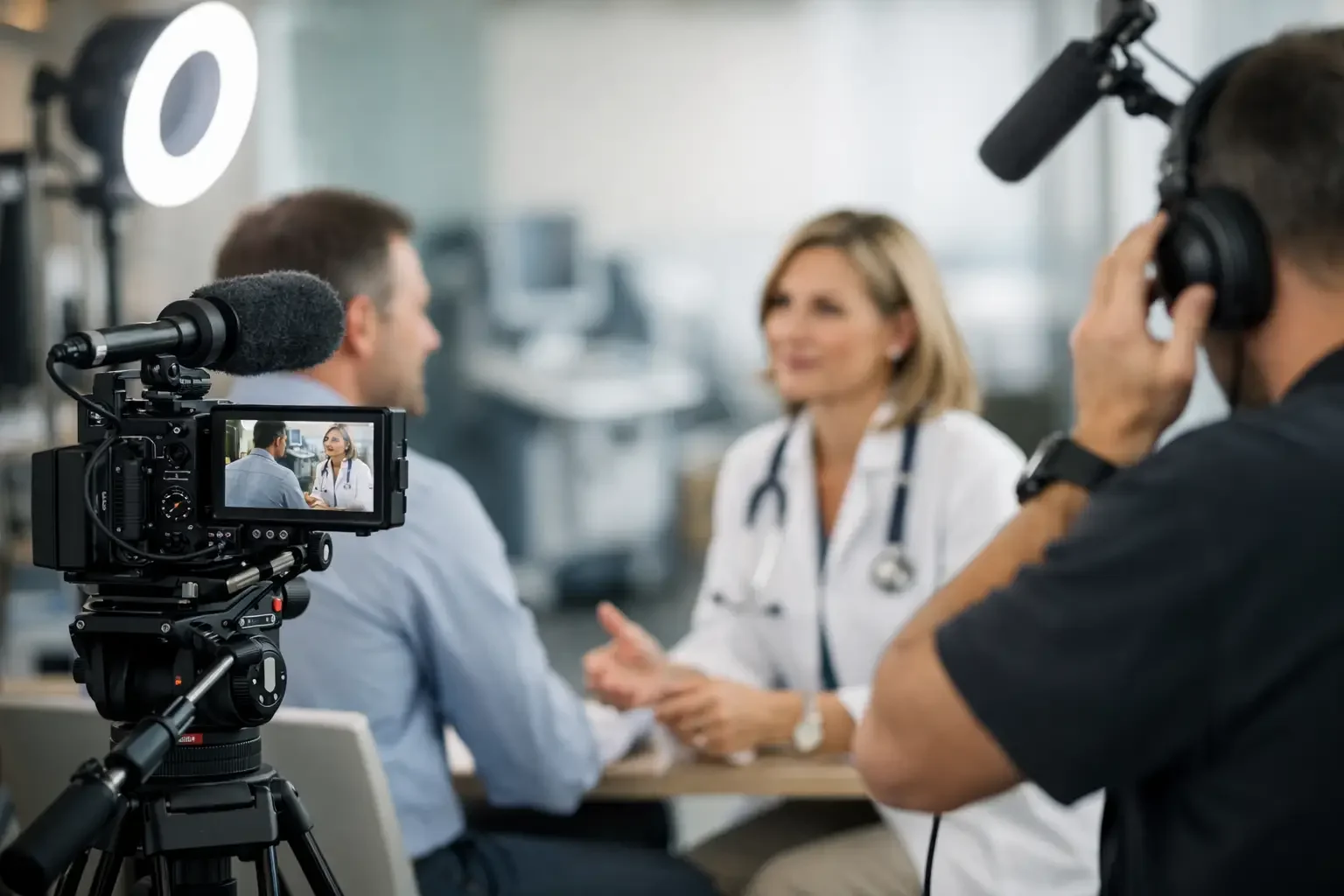
A patient lands on your website with a real concern, not casual curiosity. They are trying to decide whether your organization feels credible, compassionate, and clear before they ever call, book, or refer. That is where healthcare video production services earn their value. Done well, they do more than make a brand look polished. They reduce uncertainty, build trust faster, and help people understand what care with your team actually feels like.
At Chisum Multimedia, we understand that healthcare organizations face a different standard than most industries. You are not simply promoting a service. You are communicating expertise, safety, empathy, and confidence in moments that can feel deeply personal to the viewer. A generic marketing video rarely meets that standard. Healthcare audiences notice the difference between content that looks staged and content that feels honest, thoughtful, and professionally produced.
Why healthcare video production services matter
Healthcare decisions are often high-stakes and emotional. A patient may be comparing providers after a new diagnosis. A family member may be researching treatment options late at night. A referral partner may be evaluating whether your organization reflects the level of care they want associated with their own reputation. In each case, video can answer questions before a conversation starts.
The right video helps people see your team, hear your voice, and understand your process. That matters because healthcare marketing is often limited by complexity. Services can be difficult to explain. Clinical expertise can be hard to translate into language that feels accessible. And if the message becomes too polished or too technical, trust can drop instead of rise.
This is why strong healthcare video production services balance strategy with sensitivity. The creative has to look excellent, but it also has to respect the context. A hospital system, private practice, specialty clinic, senior care provider, therapy group, or health nonprofit may all need video, but not for the same reasons and not in the same style.
What effective healthcare video content actually does
The best healthcare videos are clear on purpose. They are not built around visual flair alone. They are created to move a specific audience toward confidence.
Sometimes that means introducing a physician or care team in a way that feels calm and credible. Sometimes it means showing a facility so patients know what to expect before they arrive. Sometimes it means explaining a procedure, service line, or care philosophy without overwhelming the viewer.
For healthcare marketers and administrators, this is where video becomes a practical asset rather than a nice extra. It can support brand positioning, patient education, recruitment, outreach, donor communication, and internal messaging. One well-planned production can create a flagship brand piece, shorter social edits, testimonial clips, recruiting assets, and website video content that keeps working long after the shoot is over.
That said, more footage does not automatically mean more value. The strongest projects start by narrowing the objective. If the goal is patient acquisition, the message should reduce hesitation and increase trust. If the goal is recruiting, the content should reflect culture, professionalism, and purpose. If the goal is awareness, the story may need a broader emotional frame.
Healthcare video production services for trust-first marketing
Trust is the center of healthcare marketing, and video can either strengthen it or weaken it. People are quick to sense when a message feels scripted, exaggerated, or disconnected from the real patient experience.
That is why planning matters so much. Before cameras roll, a production partner should understand who the audience is, what concerns they may have, what claims need to be handled carefully, and what kind of tone fits your organization. A cosmetic practice may need a different visual language than a pediatric clinic. A regional health system may need broad brand storytelling, while a specialty provider may need precise service-line messaging.
There is also a trade-off between production polish and authenticity. High-end visuals matter. Clean lighting, strong audio, confident interviewing, and purposeful editing all shape credibility. But if the final piece feels overproduced, it can lose warmth. In healthcare, the goal is usually not cinematic for its own sake. It is professional, human, and believable.
What to expect from a strategic production process
A smooth production process is not a luxury in healthcare. It is part of the service. Internal stakeholders are busy. Physicians have limited availability. Administrators want clarity. Marketing teams need content that serves multiple channels without creating unnecessary rounds of confusion.
A good process starts with discovery. That means identifying business goals, target audience, distribution plans, locations, interview subjects, approvals, and any operational or privacy considerations. In healthcare settings, logistics can affect everything from shoot schedules to what can be captured on camera.
From there, pre-production should shape the message before production day. This may include interview prompts, story outlines, visual planning, location prep, and coordination with your team so the shoot feels organized rather than disruptive. The actual filming should be efficient and respectful of your environment. The final edit should reflect both brand standards and audience needs.
When the process is handled well, clients are not left trying to direct their own production while also running their organization. They have a creative partner who knows how to lead, listen, and keep things moving.
Choosing the right healthcare video production services
Not every video company is built for healthcare work. Some are strong visually but weak strategically. Others can execute a basic shoot but struggle to create messaging that supports growth. The right fit usually comes down to three things: clarity, professionalism, and judgment.
Clarity means the team can translate your goals into a video plan that makes sense. Professionalism means they are dependable, prepared, and comfortable working with organizational stakeholders. Judgment means they know when to push creatively and when to keep the message simple.
It is also worth asking how the final videos will be used. A production that looks great but does not fit your website, social channels, ad campaigns, presentations, or recruiting efforts can miss the mark. You want a partner who thinks beyond a single deliverable and helps you create content with lasting marketing value.
For many organizations in Middle Tennessee, that local understanding matters too. Teams serving Murfreesboro, Nashville, Franklin, and surrounding communities often benefit from a partner who understands regional business culture and can work smoothly with professional service organizations, medical practices, and healthcare brands. That is part of what makes Chisum Multimedia a strong fit for healthcare clients who want both polished execution and a process that feels easy to manage.
Common types of healthcare videos worth producing
The right mix depends on your goals, but several formats consistently perform well. Brand story videos help communicate who you are and why your approach matters. Provider profile videos help patients feel familiarity before the first visit. Patient testimonial videos can be powerful when handled with care and authenticity. Service explainer videos help simplify more complex offerings, especially when the path to treatment is not immediately obvious.
Recruitment videos are also increasingly valuable. Healthcare organizations compete hard for talent, and candidates want more than job descriptions. They want to understand culture, leadership, environment, and mission. A thoughtful recruiting video can communicate all of that faster than a static careers page.
There is no rule that says every organization needs every type of video. In many cases, a smaller set of focused assets will outperform a larger collection of loosely planned content. The best approach is usually to prioritize the videos that solve the most immediate communication challenge first.
The cost question and what affects value
Healthcare leaders often ask what video should cost. The more useful question is what the project needs to accomplish. Pricing depends on scope, planning needs, crew requirements, filming days, number of deliverables, editing complexity, and how many stakeholders are involved.
A simple physician profile will not require the same resources as a multi-location brand campaign. Neither approach is automatically better. It depends on your goals, timeline, and how broadly the content will be used.
The bigger mistake is choosing based on lowest price alone. In healthcare, a poor video can make a strong organization look disorganized or generic. A well-executed production, by contrast, can support your marketing for months or years across multiple touchpoints. That is where the return tends to show up - in stronger first impressions, better audience engagement, and more confidence in your brand.
Healthcare organizations do not need louder marketing. They need clearer, more trustworthy communication. Video is one of the most effective ways to deliver it when it is guided by strategy, produced with care, and built around the real experience you offer. If your audience needs to feel confidence before they take the next step, the right video can help them get there.